
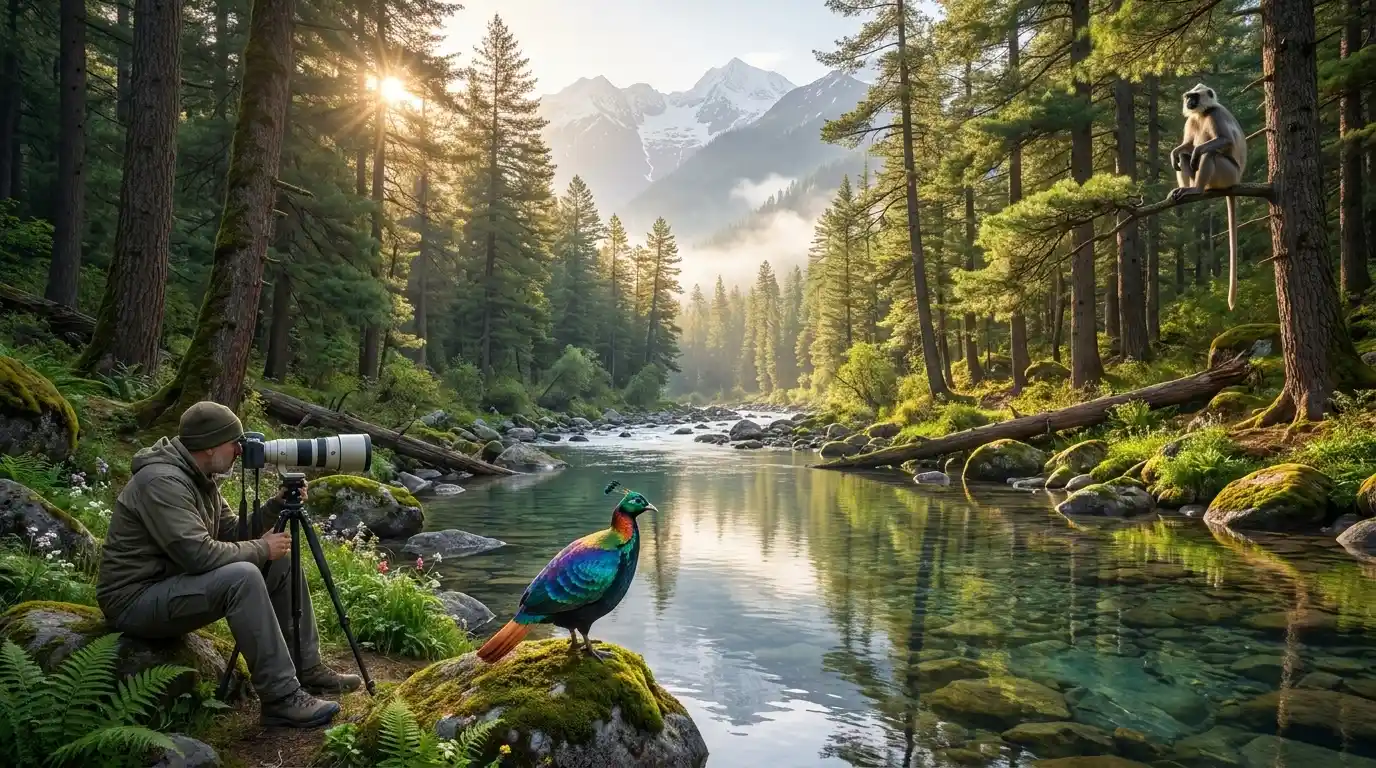
Beyond its majestic mountains, crystal-clear rivers, and lush pine forests, Kumrat Valley is also home to an impressive variety of wildlife. Exploring Kumrat Valley wildlife allows visitors to discover a thriving ecosystem where colorful birds, native mammals, and diverse plant life coexist in one of Pakistan’s most beautiful natural landscapes. Whether you’re an experienced birdwatcher, wildlife photographer, or simply someone who enjoys spending time in nature, Kumrat Valley offers remarkable opportunities to observe animals in their natural habitat. This guide introduces the valley’s fascinating wildlife, highlights the best places for birdwatching, and shares practical tips for responsible nature tourism.
Why Kumrat Valley Is a Haven for Wildlife
The untouched forests, alpine meadows, rivers, and mountain slopes of Kumrat create ideal habitats for numerous bird and mammal species. Compared to heavily urbanized regions, the valley’s relatively undisturbed environment allows wildlife to thrive throughout the year.
Nature enthusiasts visiting Kumrat can enjoy peaceful surroundings while observing the region’s rich biodiversity.
Some features that make the valley an excellent wildlife destination include:
- Dense cedar and pine forests
- Freshwater rivers and streams
- High-altitude meadows
- Diverse mountain ecosystems
- Minimal industrial development
- Expansive natural habitats
These unique environments support a wide variety of species, making Kumrat one of Pakistan’s rewarding destinations for eco-tourism and wildlife observation.
Animals in Kumrat: What Can You Expect to See?
One of the most common questions visitors ask is, “What animals are in the Kumrat Valley?”
Although wildlife sightings vary depending on the season and location, the valley supports several native mammals and smaller forest animals.
Visitors may encounter several native mammals and smaller forest animals throughout the valley.
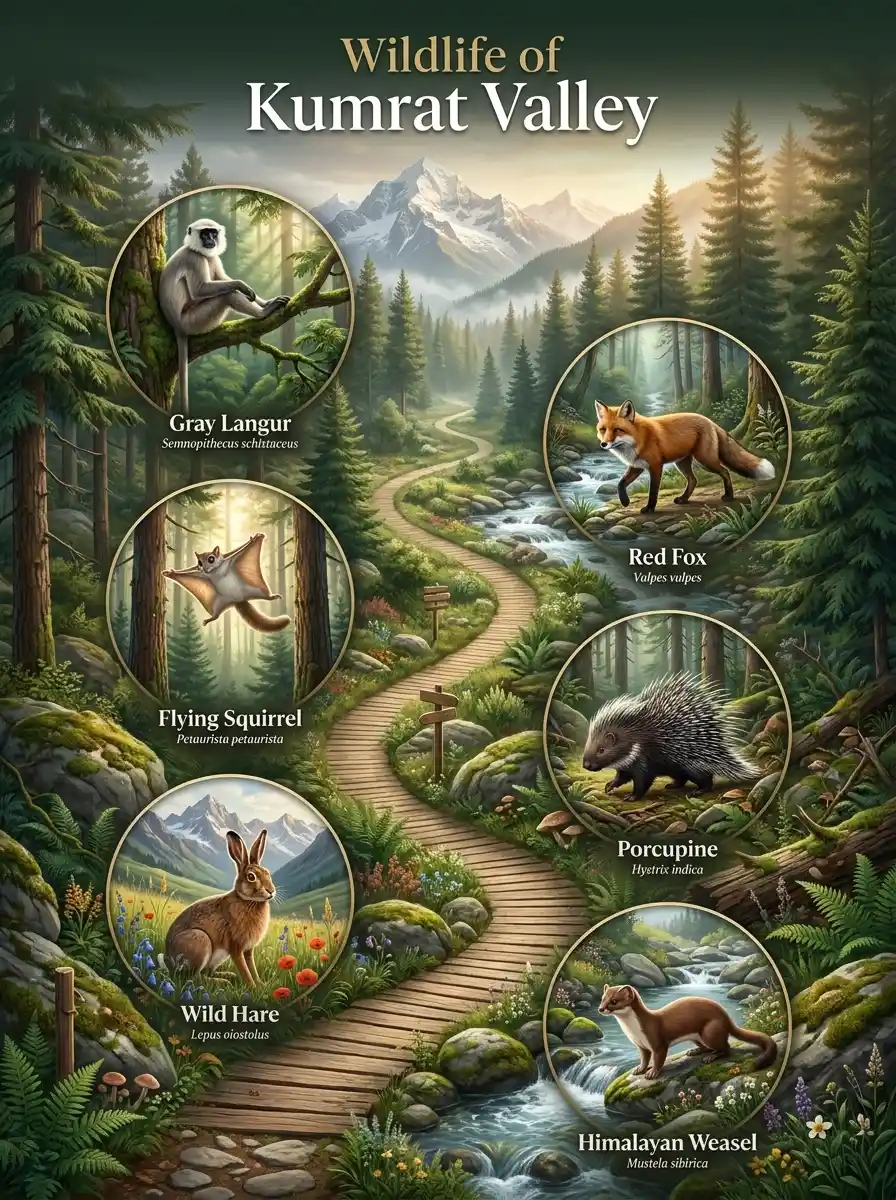
Kumrat wildlife includes:
- Himalayan gray langurs
- Red foxes
- Himalayan weasels
- Wild hares
- Flying squirrels
- Porcupines
The surrounding mountain regions are also known to support larger mammals such as the Himalayan black bear and leopard. However, these elusive animals typically avoid human activity and are rarely seen by tourists.
Many of the mammals living in Kumrat are most active during the early morning and late evening hours, making those times ideal for wildlife observation.
Patience, quiet movement, and respecting natural habitats greatly improve your chances of spotting native wildlife.
Birdwatching in Kumrat: A Paradise for Bird Lovers
One of the greatest attractions for nature enthusiasts is Birdwatching in Kumrat.
The valley’s forests, rivers, and alpine landscapes attract numerous resident and seasonal bird species, offering excellent opportunities for birdwatchers of all experience levels.
Visitors should carry binoculars and spend time quietly observing the tree canopy, riverbanks, and open meadows.
Some commonly observed birds include:
- Himalayan monal
- Golden eagle
- Himalayan woodpeckers
- White-capped redstarts
- Blue whistling thrushes
- Various finches and warblers
Early mornings are generally the best time for birdwatching because birds are most active shortly after sunrise.
Whether you’re identifying species or simply enjoying their songs, birdwatching adds another unforgettable dimension to any visit to Kumrat Valley.
Best Places to Observe Kumrat Valley Wildlife
Wildlife can be found throughout the valley, but certain locations provide particularly rewarding opportunities.
Some of the best places include:
Pine Forests
The dense forests surrounding Kumrat offer shelter for birds, squirrels, langurs, and many smaller forest animals.
Riverside Areas
Streams and rivers attract numerous bird species searching for food and nesting areas.
Alpine Meadows
Open grasslands such as Jahaz Banda and Kund Banda Meadows provide excellent opportunities to observe birds flying overhead while mammals graze in surrounding landscapes.
Quiet Nature Trails
Less-traveled walking paths often provide better chances of observing wildlife without disturbing the animals.
Exploring these diverse habitats increases your chances of encountering both birds and mammals while appreciating Kumrat’s incredible natural beauty.
Responsible Wildlife Observation
Protecting Kumrat Valley wildlife begins with responsible behavior.
Visitors should remember that the valley’s forests and rivers are home to living ecosystems that deserve respect.
When observing wildlife:
- Maintain a safe distance.
- Avoid feeding wild animals.
- Keep noise levels low.
- Stay on designated trails.
- Never leave litter behind.
- Avoid disturbing nesting birds.
Following these simple practices allows wildlife to behave naturally while preserving the valley’s ecological balance.
Planning Your Nature Adventure
Preparing for a wildlife-focused trip ensures a more enjoyable experience.
Before heading into Kumrat’s forests or meadows, consider bringing:
- Binoculars
- A camera with a zoom lens
- Comfortable hiking shoes
- Neutral-colored clothing
- Drinking water
- A field notebook for recording wildlife sightings
Mountain weather can change quickly. Before traveling, it’s always a good idea to review the latest forecasts from the Pakistan Meteorological Department (PMD).
Planning around favorable weather conditions increases your chances of successful wildlife observation while making outdoor exploration more comfortable.
Choosing Accommodation Close to Nature
Staying near forests and rivers allows visitors to experience Kumrat’s wildlife from the moment they step outside.
Accommodation surrounded by natural landscapes offers peaceful mornings filled with birdsong and opportunities to observe local wildlife without traveling far.
When selecting accommodation, look for:
- Scenic forest surroundings
- Easy access to walking trails
- Comfortable rooms
- Family-friendly facilities
- Quiet natural setting
- Helpful local travel advice
Choosing accommodation that blends comfort with nature allows you to fully enjoy every day of your wildlife adventure while remaining close to Kumrat’s most beautiful natural environments.
Best Time for Wildlife Watching in Kumrat Valley
Although Kumrat Valley is beautiful throughout the year, certain seasons offer better opportunities for observing wildlife and birds.
Late spring through early autumn is generally considered the best period for wildlife enthusiasts. During these months, forests are vibrant, rivers flow steadily, and many bird species are actively feeding and nesting.
Seasonal highlights include:
- Spring brings blooming vegetation that attracts birds and insects.
- Summer offers comfortable weather for long nature walks.
- Early autumn provides pleasant temperatures and quieter trails.
- Wildlife activity is usually greatest during the early morning and late afternoon.
Visitors hoping to photograph animals or observe bird behavior should plan outdoor excursions shortly after sunrise, when the forests are calm and wildlife is most active.
Choosing the right season greatly enhances your chances of enjoying Kumrat Valley wildlife while experiencing the valley’s stunning natural scenery.
Photography Tips for Capturing Kumrat Valley Wildlife
Photographing wildlife requires patience, preparation, and respect for nature. Rather than chasing animals, allow them to move naturally through their environment while you observe from a safe distance.
For the best results:
- Carry a telephoto or zoom lens.
- Wear neutral-colored clothing that blends with nature.
- Avoid sudden movements and loud conversations.
- Use natural light during the early morning or late afternoon.
- Focus on animals without disturbing their natural behavior.
- Be patient and allow wildlife to approach naturally.
Bird photography often requires extra patience, as many species remain high in the forest canopy or move quickly between trees. Spending time quietly near rivers or woodland clearings often produces rewarding opportunities.
The goal is not only to capture beautiful photographs but also to appreciate wildlife without causing unnecessary stress to the animals.
Bird Species in Kumrat Worth Looking For
Birdwatchers visiting Kumrat can enjoy observing a variety of resident and migratory birds throughout the valley. While sightings vary by season, several species are commonly associated with the region’s forests and mountain habitats.
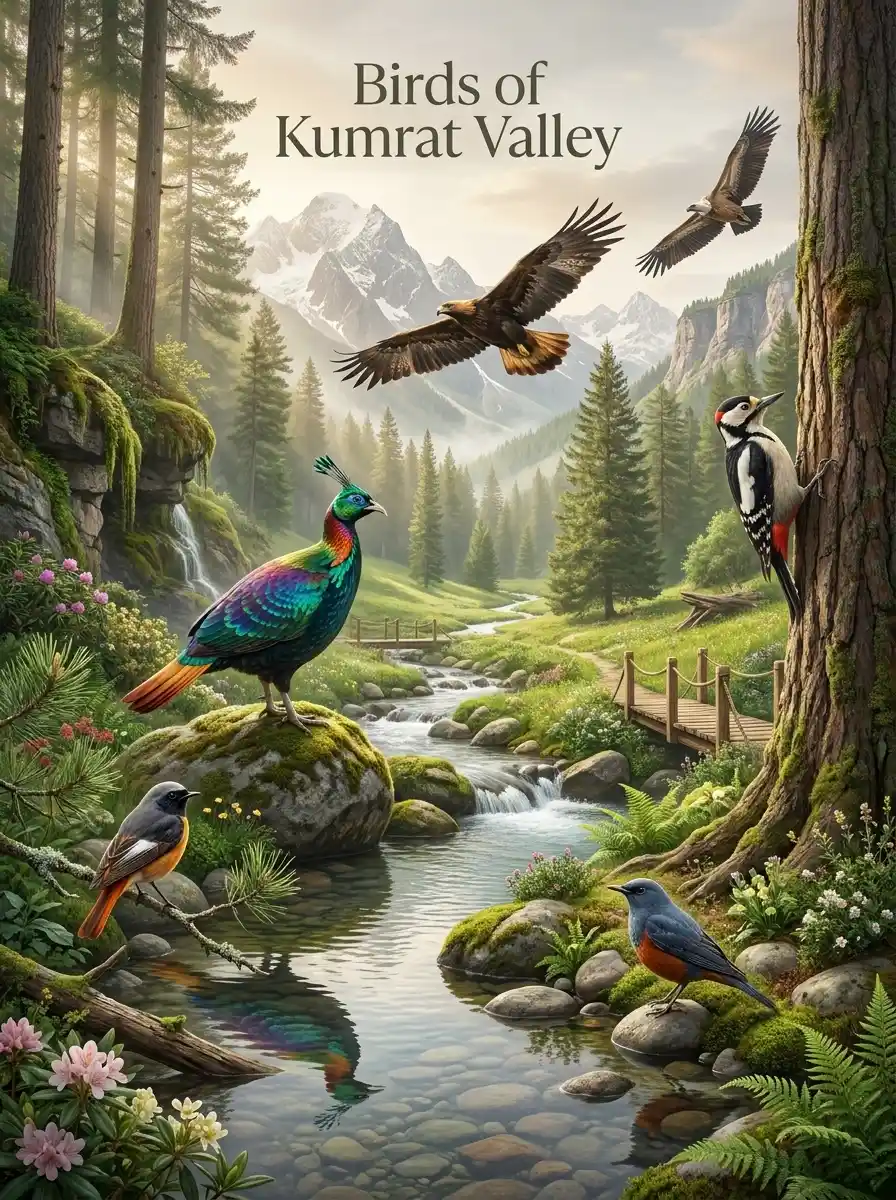
Keep an eye out for:
- Himalayan Monal
- Golden Eagle
- Himalayan Griffon Vulture
- White-capped Redstart
- Blue Whistling Thrush
- Himalayan Woodpecker
- Grey Wagtail
- Various species of finches and warblers
Many of these birds can be spotted near rivers, forest edges, or open meadows where they search for food and nesting sites.
Whether you’re an experienced birder or simply enjoy listening to birdsong, these species add another layer of beauty to your visit.
Supporting Nature Tourism in Pakistan
Visiting destinations like Kumrat contributes to the growing popularity of nature tourism Pakistan is becoming known for. Responsible tourism helps local communities while encouraging the conservation of forests, wildlife, and natural ecosystems.
Visitors can support sustainable tourism by:
- Hiring local guides.
- Staying at environmentally responsible accommodation.
- Purchasing locally made products.
- Respecting protected habitats.
- Following Leave No Trace principles.
- Educating others about wildlife conservation.
Responsible travel ensures that future generations can continue enjoying Kumrat’s remarkable biodiversity while supporting the livelihoods of local communities.
Why Every Nature Lover Should Visit Kumrat Valley
Kumrat is much more than a scenic mountain destination. Its forests, rivers, meadows, and diverse ecosystems provide opportunities to experience nature in its purest form.
Whether you’re interested in spotting native mammals, photographing colorful birds, or simply enjoying peaceful walks through untouched forests, Kumrat offers experiences that are difficult to find elsewhere.
The combination of spectacular landscapes and rich biodiversity makes it one of Pakistan’s most rewarding destinations for wildlife enthusiasts and eco-travelers alike.
Conclusion
Exploring Kumrat Valley wildlife offers an unforgettable experience for anyone who appreciates nature. From peaceful birdwatching sessions in quiet forests to the chance of spotting native mammals along scenic trails, the valley provides countless opportunities to discover Pakistan’s remarkable biodiversity.
Whether you’re identifying bird species in Kumrat, photographing wildlife, or simply enjoying the sounds of nature, every visit strengthens your connection with the natural world. By respecting wildlife and supporting responsible nature tourism Pakistan continues to promote, visitors play an important role in preserving these extraordinary ecosystems.
If you’re planning a peaceful mountain getaway surrounded by forests, rivers, and abundant wildlife, Heaven on Earth Resort provides the perfect place to stay while exploring Kumrat Valley’s breathtaking natural landscapes.
Frequently Asked Questions
1. What animals are found in Kumrat Valley?
Kumrat Valley is home to Himalayan gray langurs, red foxes, Himalayan weasels, porcupines, flying squirrels, wild hares, and numerous bird species. Larger mammals such as the Himalayan black bear and leopard inhabit surrounding mountain regions but are rarely seen.
2. Is birdwatching in Kumrat suitable for beginners?
Yes. Birdwatching in Kumrat is enjoyable for both beginners and experienced bird enthusiasts. The valley’s forests, rivers, and meadows provide excellent opportunities to observe a wide variety of bird species.
3. Which bird species can I see in Kumrat?
Visitors may spot Himalayan Monals, Golden Eagles, White-capped Redstarts, Blue Whistling Thrushes, Himalayan Woodpeckers, Himalayan Griffon Vultures, and several species of finches and warblers.
4. When is the best time to observe Kumrat Valley wildlife?
Late spring through early autumn offers the best conditions for wildlife observation, especially during the early morning and late afternoon when animals are most active.
5. How can visitors help protect wildlife in Kumrat?
Visitors should maintain a safe distance from animals, avoid feeding wildlife, stay on designated trails, dispose of waste responsibly, and support sustainable tourism practices that help conserve Kumrat’s natural environment.