
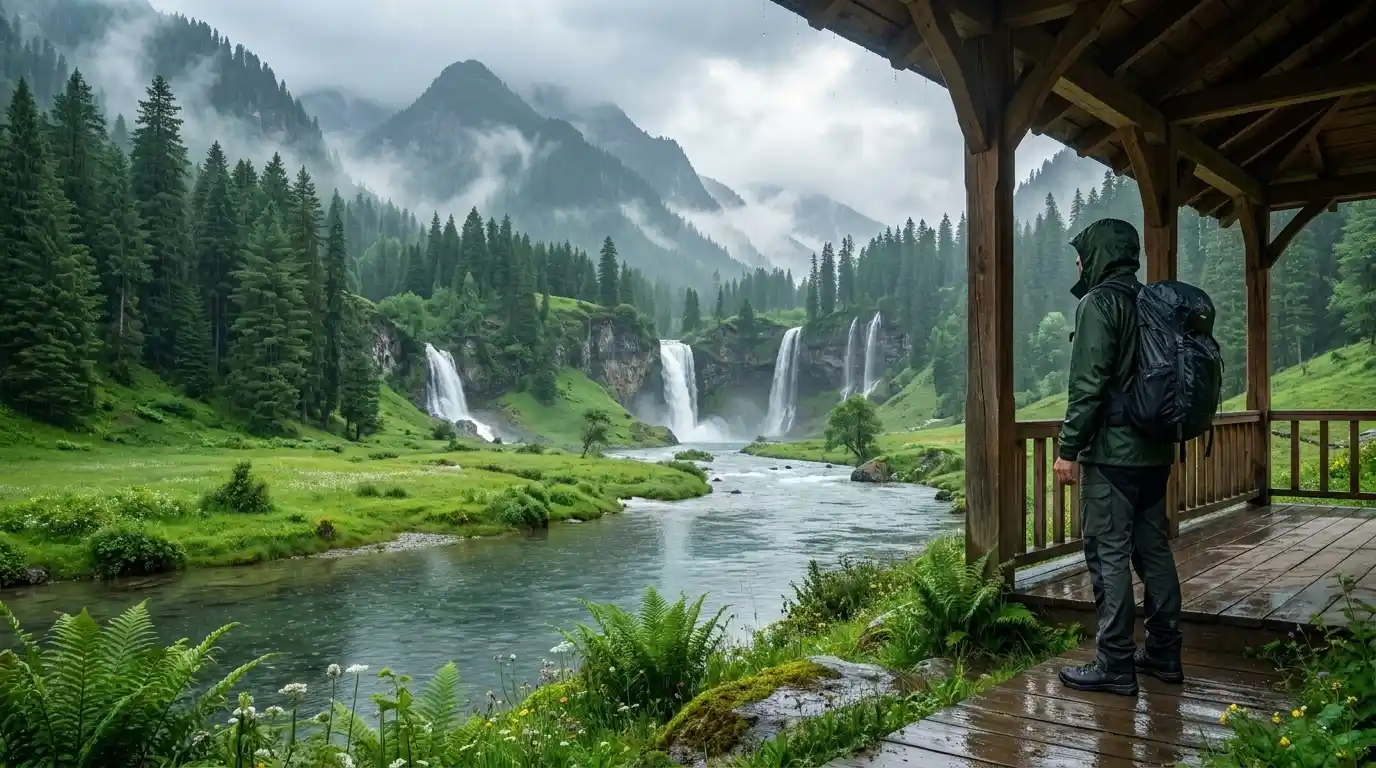
The monsoon in Kumrat transforms the valley into a lush green paradise where forests become more vibrant, rivers flow with greater force, and waterfalls appear throughout the landscape. While the rainy season enhances Kumrat’s natural beauty, it also brings challenges that travelers should prepare for before setting out. From slippery roads and changing weather to packing the right gear and planning safe transportation, understanding how to travel during the monsoon helps ensure a safe and enjoyable journey. This guide covers everything you need to know about visiting Kumrat during the rainy season, including road conditions, travel precautions, and practical advice for making the most of your trip.
What Is the Monsoon Like in Kumrat?
The monsoon season usually brings increased rainfall to Kumrat Valley, refreshing its forests, rivers, and alpine meadows. The landscape becomes greener than ever, creating breathtaking scenery that attracts photographers and nature lovers from across the country.
During this time, visitors can enjoy:
- Fresh mountain air
- Lush green forests
- Flowing waterfalls
- Mist-covered mountain peaks
- Vibrant rivers and streams
- Peaceful natural surroundings
Although the scenery is spectacular, rainfall can also affect road conditions and outdoor activities. Planning ahead is essential for a smooth and comfortable experience.
Is Kumrat Safe During Rain?
One of the most frequently asked questions travelers ask is, “Is Kumrat safe during rain?”
Yes, Kumrat can still be visited during the rainy season, provided you travel responsibly and stay informed about weather and road conditions. Most visitors enjoy safe trips by monitoring forecasts, avoiding unnecessary travel during heavy rainfall, and following local guidance.
To stay safe during the monsoon in Kumrat:
- Check weather updates before departure.
- Follow local travel advisories.
- Avoid driving during heavy rain whenever possible.
- Stay away from fast-flowing rivers and streams.
- Choose reliable accommodation in accessible locations.
- Carry emergency supplies for your journey.
Rain itself does not make Kumrat unsafe, but preparation and caution become much more important than during the dry season.
How the Kumrat Rainy Season Affects Road Travel
One of the biggest considerations during the Kumrat rainy season is road accessibility.
Mountain roads can become slippery after rainfall, while occasional landslides or temporary road closures may occur depending on weather conditions. Visibility can also decrease during periods of heavy rain or fog.
Before beginning your journey:
- Confirm the latest road conditions.
- Service your vehicle.
- Ensure your brakes and tires are in excellent condition.
- Fill your fuel tank before entering remote areas.
- Carry a spare tire and basic repair tools.
- Drive at reduced speeds on mountain roads.
Travelers unfamiliar with mountain driving may prefer hiring experienced local drivers who know the region well.
Proper planning significantly improves safety while reducing unnecessary stress during your trip.
Choosing the Right Vehicle for Monsoon Travel
Vehicle selection plays an important role when traveling during the monsoon in Kumrat.
Although many roads remain accessible, a vehicle with higher ground clearance provides greater stability on uneven or muddy sections. If you’re traveling with family or carrying camping equipment, choosing a larger vehicle may also improve comfort.
Some helpful recommendations include:
- Inspect tires before departure.
- Ensure windshield wipers are working properly.
- Check headlights and fog lights.
- Carry a flashlight and emergency kit.
- Avoid overloading your vehicle.
- Keep a fully charged mobile phone and power bank.
Safe driving habits are equally important. Maintain a safe distance from other vehicles and avoid sudden braking on wet roads.
Essential Travel Tips for Visiting During the Rainy Season
Preparing properly allows you to enjoy Kumrat’s incredible scenery without unnecessary inconvenience.
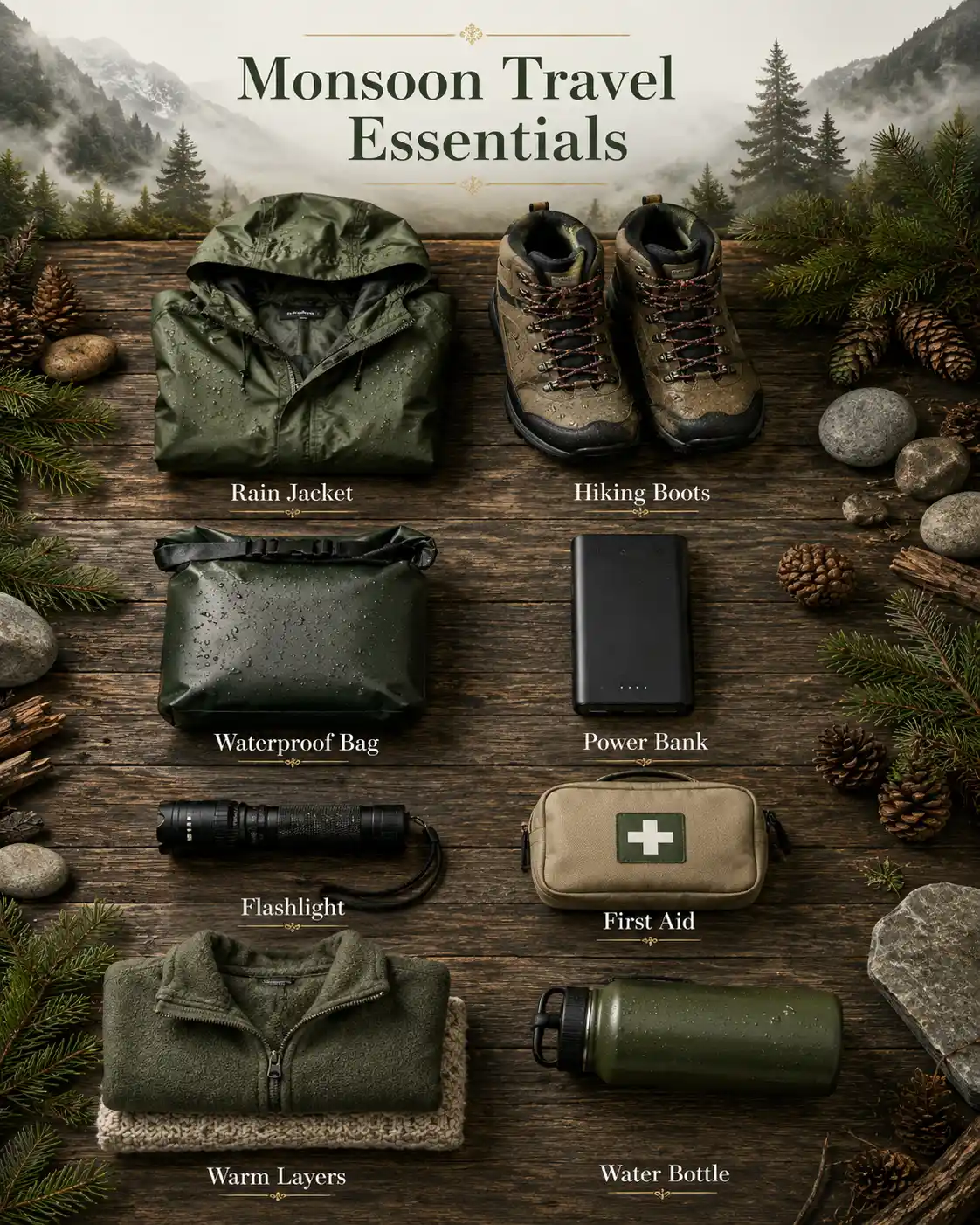
Some essential travel tips include:
- Pack waterproof clothing.
- Carry a rain jacket or poncho.
- Wear waterproof hiking shoes with good grip.
- Protect electronics using waterproof bags.
- Bring extra socks and warm clothing.
- Pack a small first-aid kit.
- Carry snacks and bottled drinking water.
Having the right equipment ensures you’re prepared for changing weather while remaining comfortable throughout your journey.
Accommodation Tips During the Monsoon
Selecting the right accommodation becomes even more important during rainy weather.
A comfortable resort or hotel provides a safe place to relax if rainfall temporarily interrupts outdoor activities.
When booking your stay, consider accommodation that offers:
- Reliable electricity backup
- Comfortable indoor facilities
- Secure parking
- Easy road access
- On-site dining options
- Helpful local travel advice
Staying somewhere with experienced staff can also be valuable, as they often provide updated information about weather conditions and nearby attractions.
Choosing quality accommodation helps ensure that unexpected rainfall doesn’t interrupt your overall travel experience.
Monitoring Weather Before and During Your Trip
Weather conditions in mountain regions can change quickly, especially during the rainy season.
Before leaving for Kumrat and throughout your stay, regularly check weather forecasts and local travel updates.
This allows you to:
- Adjust sightseeing plans if necessary.
- Avoid traveling during heavy rainfall.
- Schedule hikes during clearer weather.
- Plan safer departure times.
- Stay informed about changing road conditions.
Mountain weather can change quickly. Before traveling, it’s always a good idea to review the latest forecasts from the Pakistan Meteorological Department (PMD).
Remaining informed is one of the simplest yet most effective ways to enjoy a safe and memorable visit during the rainy season.
What Activities Can You Enjoy During the Monsoon?
Rain doesn’t mean your trip has to stay indoors. In fact, the monsoon in Kumrat offers a completely different experience from the dry season. The valley becomes greener, waterfalls are more dramatic, and mist rolling through the pine forests creates unforgettable scenery.
If the weather is favorable, you can enjoy:
- Nature walks through lush forests
- Landscape and waterfall photography
- Relaxing beside mountain streams from safe viewing areas
- Exploring nearby meadows
- Enjoying local cuisine at your resort
- Watching clouds drift across the mountains
Always avoid hiking or venturing into remote areas during periods of heavy rainfall, and follow any advice provided by local guides or accommodation staff.
Places to Avoid During Heavy Rain
While many parts of Kumrat remain accessible during light or moderate rainfall, some areas become riskier during prolonged or heavy rain.
For your safety, avoid:
- Fast-flowing rivers and stream crossings
- Steep mountain slopes prone to landslides
- Unmarked hiking trails
- Flooded roads
- Remote valleys without reliable communication
If local authorities or residents recommend delaying travel to certain locations, it’s always best to follow their guidance.
Waiting a few hours-or even a day-for conditions to improve is far safer than attempting unnecessary travel during severe weather.
Packing Checklist for Monsoon Travel
Packing wisely can make your rainy-season trip much more comfortable.
Consider bringing:
- Waterproof backpack
- Rain jacket or poncho
- Waterproof hiking boots
- Quick-dry clothing
- Warm fleece or light jacket
- Power bank
- Flashlight
- Personal medications
- Waterproof phone pouch
- Extra plastic bags for wet clothing
Keeping essential belongings dry allows you to enjoy sightseeing without worrying about damaged equipment or uncomfortable clothing.
Responsible Travel During the Rainy Season
The rainy season is especially important for Kumrat’s fragile ecosystem. Increased rainfall can make forests and trails more vulnerable to damage, so responsible tourism plays an essential role in preserving the valley.
Visitors can help by:
- Taking all waste back with them.
- Staying on established walking paths.
- Avoiding damage to plants and trees.
- Respecting wildlife habitats.
- Supporting local businesses and guides.
- Conserving water and natural resources where possible.
Small actions by every traveler contribute to protecting Kumrat’s natural beauty for future visitors.
Why the Monsoon Can Be a Great Time to Visit Kumrat
Although many travelers prefer clear summer days, the rainy season offers a unique perspective on the valley.
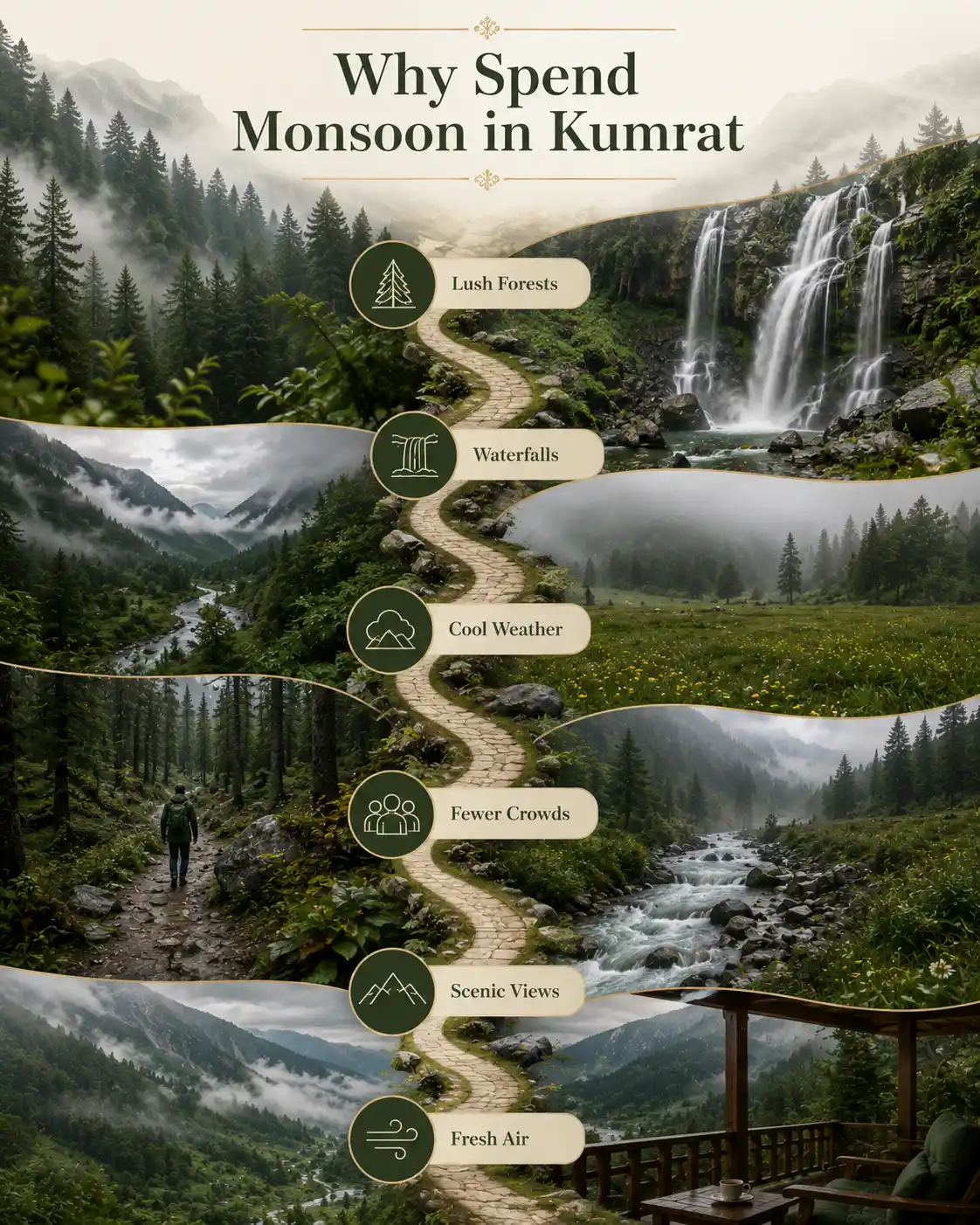
During the monsoon, you’ll often experience:
- Fewer tourists
- Greener landscapes
- More dramatic waterfalls
- Cooler temperatures
- Beautiful mist-covered forests
- Peaceful surroundings ideal for relaxation and photography
For travelers who enjoy nature at its freshest and don’t mind occasional rainfall, the monsoon in Kumrat can be one of the most rewarding times to visit.
The key is simply arriving prepared and allowing flexibility in your travel plans.
Conclusion
Experiencing the monsoon in Kumrat offers a unique opportunity to see the valley at its most vibrant. The forests become greener, waterfalls flow with renewed energy, and mist-covered mountains create breathtaking scenery that feels almost untouched.
While the rainy season requires extra preparation, careful planning, responsible driving, and attention to weather conditions allow most travelers to enjoy a safe and memorable trip. Packing the right gear, monitoring road updates, and choosing reliable accommodation all contribute to a smoother experience.
If you’re planning a peaceful mountain getaway during the Kumrat rainy season, Heaven on Earth Resort provides a comfortable retreat where you can relax, enjoy stunning natural surroundings, and easily explore the valley whenever weather conditions allow.
Frequently Asked Questions
1. Is Kumrat safe during rain?
Yes. Kumrat can be safely visited during the rainy season if travelers monitor weather forecasts, follow local advice, drive carefully, and avoid unnecessary travel during periods of heavy rainfall.
2. Do roads to Kumrat remain open during the monsoon?
Many roads remain accessible, but heavy rainfall may occasionally lead to temporary closures, landslides, or slower travel. Always check current road conditions before departing.
3. What should I pack for the monsoon in Kumrat?
Essential items include waterproof clothing, hiking boots, a rain jacket, power bank, flashlight, first-aid kit, waterproof bags for electronics, warm clothing, and drinking water.
4. Is the rainy season a good time to visit Kumrat?
Yes. Travelers who enjoy lush green landscapes, dramatic waterfalls, fewer crowds, and cooler weather often find the rainy season especially rewarding.
5. Can I go hiking during the Kumrat rainy season?
Yes, but only when weather conditions are favorable. Avoid steep trails, river crossings, and remote areas during or immediately after heavy rainfall.