

When you arrive in Kumrat Valley, the clear river, tall pine trees, and quiet trails feel almost untouched. That calm beauty is the reason so many people visit, and it is also the reason it needs care. Responsible tourism in Kumrat Valley is about enjoying this place while making sure it stays just as lovely for the next traveler.
The good news is that you do not need to be an expert. Responsible tourism in Kumrat Valley starts with small, simple choices that you can make from the moment you pack your bag. This guide shows you how.
How Can Tourists Practice Responsible Tourism in Kumrat Valley?
Think of yourself as a guest in someone else’s home, because you are. The valley belongs to the people who live here, and the wildlife that shares it. Responsible tourism in Kumrat Valley means leaving things as you found them, or even a little better.
A simple way to remember it is to plan before you go, respect while you are there, and clean up before you leave. Check the weather, pack light, travel in a small group if you can, and ask locals for advice about where to walk and what to avoid. These habits protect nature and keep the trip smooth for you too.
How Can Visitors Reduce Waste in Mountain Destinations?
Waste is one of the biggest problems in mountain places because there are few places to throw it away, and wind or water can carry it far. A single plastic wrapper can end up in the river within hours. Reducing waste in Responsible tourism in Kumrat Valley begins before you even leave home.
Here are easy ways to cut waste:
- Carry a reusable water bottle and refill it instead of buying many small bottles
- Pack snacks in reusable boxes instead of single-use plastic
- Bring a small bag so you can carry all rubbish back with you
- Say no to extra plastic bags when you buy food or small items
- Never burn plastic, since the smoke is harmful to people and nature
If you see rubbish left by someone else, pick up a little if it is safe to do so. Small acts like this help keep trails and campsites clean for everyone.
What Are the Principles of Sustainable Tourism?
Sustainable tourism sounds like a big phrase, but the ideas are simple. The goal is to enjoy a place without damaging it, and to make sure local people benefit from your visit. Sustainable tourism in Pakistan is growing as more travelers look for calm, natural places like this one.
The main principles are easy to remember:
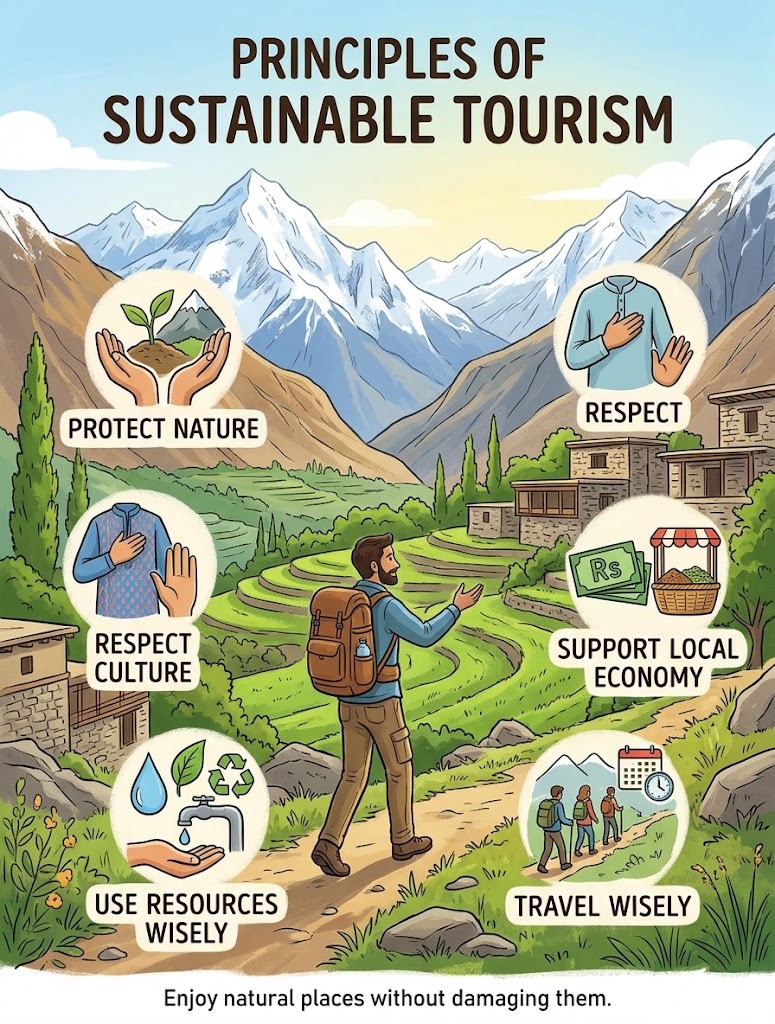
- Protect nature by leaving no trace and keeping a safe distance from wildlife
- Respect local culture, including dress, greetings, and private spaces
- Support the local economy by spending money in the community
- Use resources wisely, such as water, wood and electricity
- Travel in smaller groups and during quieter times when possible
When you follow these ideas, your trip becomes part of the solution rather than part of the pressure on the valley.
How Can Tourists Support Local Communities?
The people of the valley are the best guardians of this land, and your visit can support them in real ways. Buying from local shops, eating at small family-run eateries, and hiring local guides all keep money inside the community.
Here is how you can help:
- Hire local guides and drivers rather than bringing outside services
- Buy snacks, tea and crafts from local sellers and pay a fair price
- Ask before taking photos of people, especially women and children
- Dress modestly and greet people politely in villages
- Follow local advice about where you can walk, camp, or light a fire
These habits are a big part of responsible travel in northern Pakistan. They show respect, and they often lead to warm conversations and a deeper understanding of mountain life. Responsible tourism in Kumrat Valley is much richer when you take the time to listen.
How Can Travelers Protect Forests and Rivers?
The forests and rivers are the heart of the valley. Tree roots hold the soil on steep slopes, and the river provides water to villages below. This is why environmental conservation in mountain regions matters so much, because damage in one place can affect water, soil, and wildlife far downstream.
You can help protect them with these simple actions:
- Stay on marked paths so young plants and roots are not crushed
- Never wash with soap or detergent directly in the river
- Keep campfires small, use only safe spots, and put them out fully
- Do not cut branches, carve bark, or pick plants
- Keep noise low so birds and animals are not disturbed
- Choose camp spots well away from the water edge
Each of these steps supports Responsible tourism in Kumrat Valley and helps the forest stay healthy through every season.
Why Small Choices Matter in the Mountains
It may feel like one visitor cannot change much, but thousands of small choices add up. When many travelers follow the same habits, trails stay clean, rivers stay clear, and villages feel the benefit. This is what eco-tourism in Kumrat Valley looks like in real life: a gentle form of travel that gives back as much as it takes.
Mountain places also heal slowly. A trampled path or a burnt patch of ground can take years to recover. Thinking about this before you act helps you protect environmental conservation in mountain regions in a practical way, one trip at a time.
Travel Lightly with Heaven on Earth Resort
If you want to enjoy the valley in comfort while still travelling lightly, Heaven on Earth Resort is a calm place to base your trip. You can wake up to fresh mountain air, walk to nearby trails, and return to a cozy dome without needing a long drive each day. Our team is happy to share simple tips on local etiquette, waste, and safe walking spots, so your visit stays gentle on the valley. Choosing a stay that values nature is a great step towards sustainable tourism in Pakistan that you can feel good about.
Conclusion
Protecting this valley does not take big effort, only thoughtful habits. Carry your rubbish out, respect local people, take care of the forest and river, and move slowly enough to notice the beauty around you. When you practice Responsible tourism in Kumrat Valley, you help keep it quiet, clean, and welcoming.
Ready to plan a trip that treats the valley with care? Stay at Heaven on Earth Resort, enjoy comfortable dome accommodation and warm hospitality, and leave every trail better than you found it. Contact us today to check availability and book your stay.
Frequently Asked Questions
Is it safe to drink water straight from the river or streams?
It is best not to drink untreated water from streams, even if it looks clear. Carry bottled water, or use a filter or purification tablets, and refill from a trusted source.
What should you do with food waste on a hike or camping trip?
Pack it out with the rest of your rubbish. Food scraps can harm wildlife and attract animals to campsites, so never leave them on the ground or in the river.
Is it fine to take stones, flowers or pinecones as souvenirs?
It is better to leave them where they are. Small natural items are part of the forest and river, and removing them can slowly change the place for others and for wildlife.
Which time of year is best for a low-impact visit?
Quieter months, such as late autumn or early spring, put less pressure on trails and campsites. Fewer visitors also make it easier to enjoy the valley at a gentle pace.
Can children learn about caring for nature during the trip?
Yes, and it is a great chance to teach them early. Let them help carry rubbish, spot birds quietly, and stay on the path so they learn that nature deserves respect.