
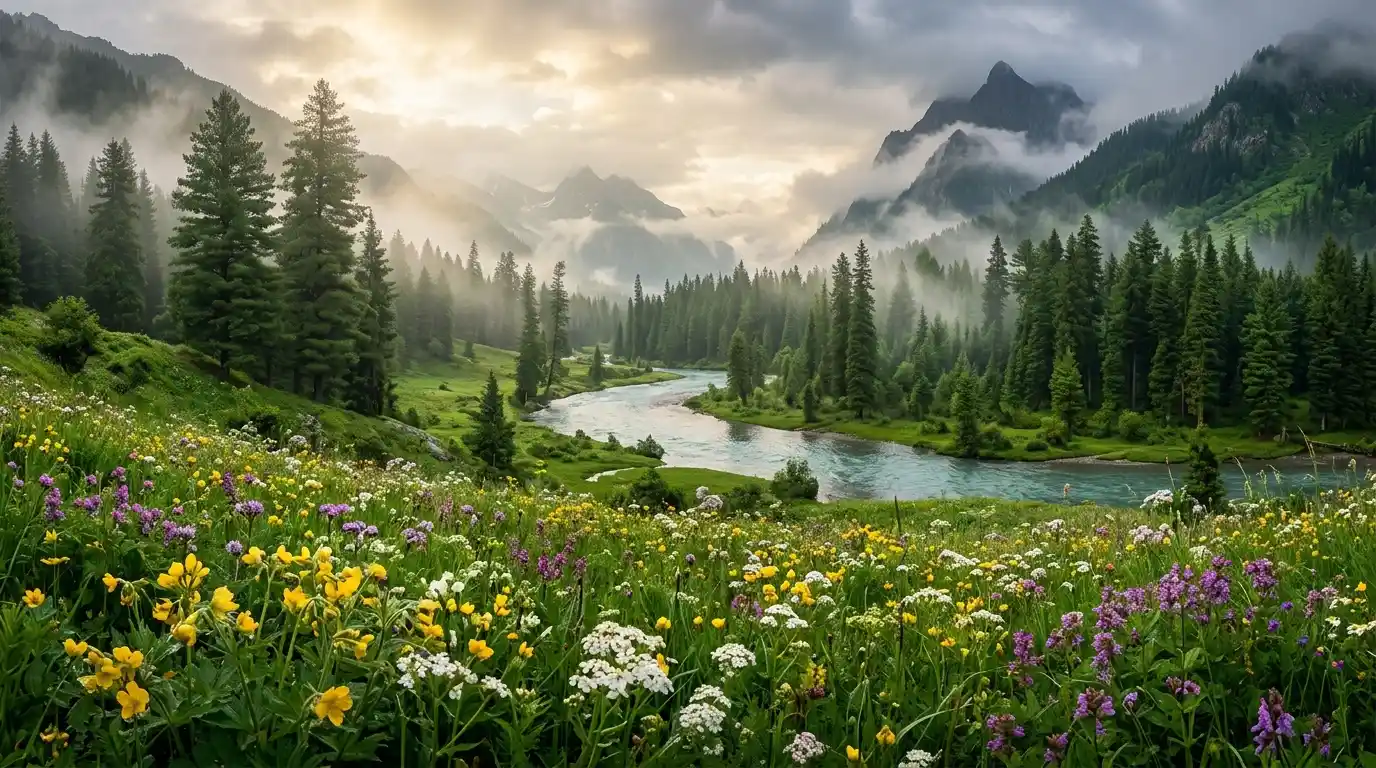
Kumrat Valley transforms into one of the most visually striking landscapes in northern Pakistan during the monsoon season. What is usually a quiet alpine valley becomes a dense, mist-covered ecosystem filled with rivers, cedar forests, and naturally growing floral patches.
For travelers searching for Kumrat wildflowers, this season reveals the valley at its most vibrant. The combination of rainfall, mountain runoff, and fertile soil triggers widespread greenery, making the entire region feel alive and freshly renewed.
Unlike cultivated gardens, Kumrat wildflowers grow freely across meadows, forest floors, and riverbanks. This untouched natural growth is what makes the valley so special for photographers, hikers, and nature lovers.
The experience of observing Kumrat wildflowers during monsoon is not just visual, it is immersive. The air feels cooler, the mist moves through cedar trees, and every trail seems to reveal a new patch of seasonal bloom.
Why Monsoon Turns Kumrat Into a Green Paradise
The monsoon season is the primary driver behind the transformation of Kumrat Valley. The environment becomes a perfect breeding ground for vegetation and floral growth.
The valley benefits from:
- Continuous rainfall that nourishes soil
- Snowmelt from surrounding mountains
- Dense cedar forest moisture retention
- Active river systems like Panjkora
- Naturally fertile alpine terrain
All these conditions contribute to the rapid spread of greenery and the appearance of Kumrat wildflowers across the landscape. This is also when Kumrat greenery reaches its peak intensity.
Wildflowers of Kumrat Valley
Kumrat does not have cultivated flower gardens. Instead, its beauty comes from naturally growing wildflowers scattered across the valley.
Common floral patterns include:
- Yellow alpine flowers in open meadows
- White blossoms near riverbanks
- Purple and blue hillside flora
- Forest-floor seasonal blooms
- Grassland flowers after rainfall
These flowers grow freely, which makes the experience feel untouched and authentic. Unlike structured flower gardens, Kumrat wildflowers change location and density every season, making every visit unique.
Best Season for Flowers in Kumrat
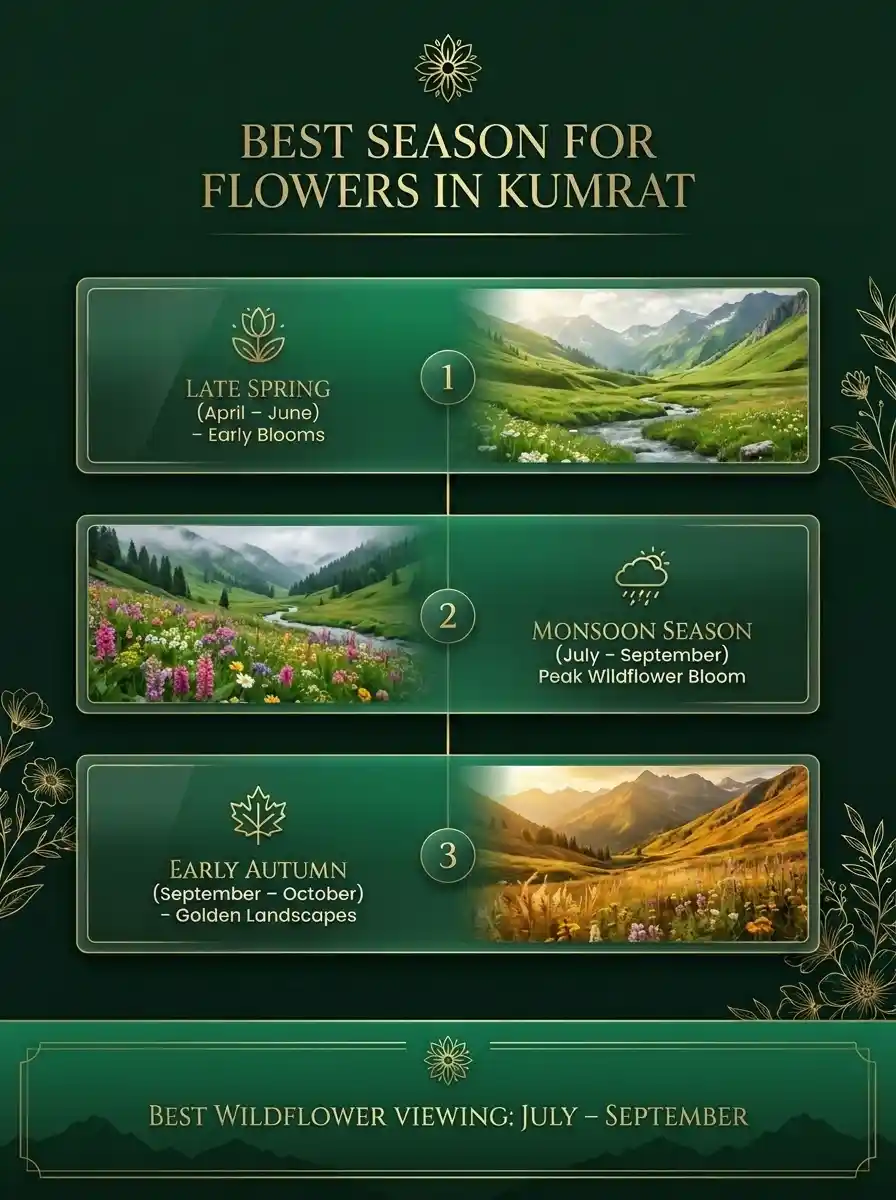
Timing plays a major role in experiencing flowers in Kumrat Valley.
1. Late Spring (April to June)
- Early greenery begins
- Light floral growth
- Pleasant weather conditions
2. Monsoon Season (July to September) BEST
- Maximum greenery
- Full wildflower bloom
- Misty, cinematic landscapes
- Ideal for photography
3. Early Autumn (September to October)
- Green fades into golden tones
- Fewer crowds
- Calm weather conditions
For travelers focused on scenery and photography, monsoon remains the best season for flowers in Kumrat.
Best Places to See Wildflowers in Kumrat
Kumrat Valley offers countless opportunities to witness naturally growing wildflowers, especially during the monsoon season when the landscape is at its most vibrant. The combination of regular rainfall, fertile alpine terrain, and dense forest ecosystems allows Kumrat wildflowers to flourish across the region. While flowers can be found throughout the valley, certain locations are particularly known for their scenic beauty, lush greenery, and excellent photography opportunities.
Riverbanks of Panjkora
The Panjkora River plays a major role in sustaining the valley’s rich ecosystem. Its flowing waters create moist soil conditions along the riverbanks, encouraging the growth of seasonal vegetation and wildflowers. During the monsoon months, these riverside areas become even more vibrant as fresh greenery spreads across the landscape. Visitors can often spot clusters of white and yellow blooms growing naturally near the water’s edge, creating beautiful contrasts against the crystal-clear river and surrounding forests.
Cedar Forest Clearings
The dense cedar forests of Kumrat are among the valley’s most iconic attractions. Within these forests, open clearings receive filtered sunlight that creates ideal conditions for seasonal blooms. During the monsoon season, the combination of moisture, shade, and sunlight encourages the growth of diverse plant life. These forest openings are often dotted with colorful Kumrat wildflowers, while the surrounding greenery and mist-covered trees create a magical atmosphere that photographers and nature lovers find irresistible.
Open Meadows Near Campsites
Many of the open meadows scattered throughout Kumrat transform dramatically after periods of rainfall. What may appear as simple grasslands during drier months quickly become vibrant carpets of greenery and seasonal flowers during monsoon. These expansive meadows provide some of the best opportunities to experience Kumrat wildflowers in large numbers. The wide-open landscapes, combined with mountain backdrops and fresh monsoon air, create some of the most picturesque scenes in the valley.
Hidden Forest Trails
Some of the most rewarding wildflower sightings can be found away from the main tourist routes. Hidden forest trails and lesser-explored pathways often reveal untouched clusters of seasonal blooms growing naturally among the vegetation. These quieter areas allow visitors to experience Kumrat’s greenery in its most pristine form. During monsoon, the trails become surrounded by dense foliage, moss-covered surfaces, and colorful wildflowers that seem to appear around every corner, making exploration feel like a journey through an untouched natural paradise.Less explored paths often reveal untouched wildflower clusters.
For deeper exploration of forest routes, you can also check our blog on the Kumrat forest trails.
Nature Photography in Kumrat (Monsoon Season)
Kumrat is one of the most underrated destinations for nature photography Kumrat.
Best subjects include:
- Wildflower close-ups
- Fog-covered cedar forests
- Panjkora River reflections
- Dew drops on petals
- Misty valley landscapes
- Post-rain greenery
Best shooting times:
- Early morning (mist + soft light)
- After rainfall (high saturation greens)
- Late afternoon (golden shadows)
The dynamic weather ensures every frame of Kumrat wildflowers feels unique.
What to Expect During Monsoon Travel
Visiting Kumrat in monsoon is visually rewarding but requires flexibility. Before traveling, it’s always a good idea to review the latest forecasts from the Pakistan Meteorological Department.
Conditions you should expect:
- Sudden rain showers
- Slippery forest paths
- Cool temperatures
- Occasional road delays
- Extremely dense greenery
Despite these challenges, the experience of seeing Kumrat wildflowers in their natural habitat makes the journey worthwhile.
What to Pack for Monsoon Kumrat Trip
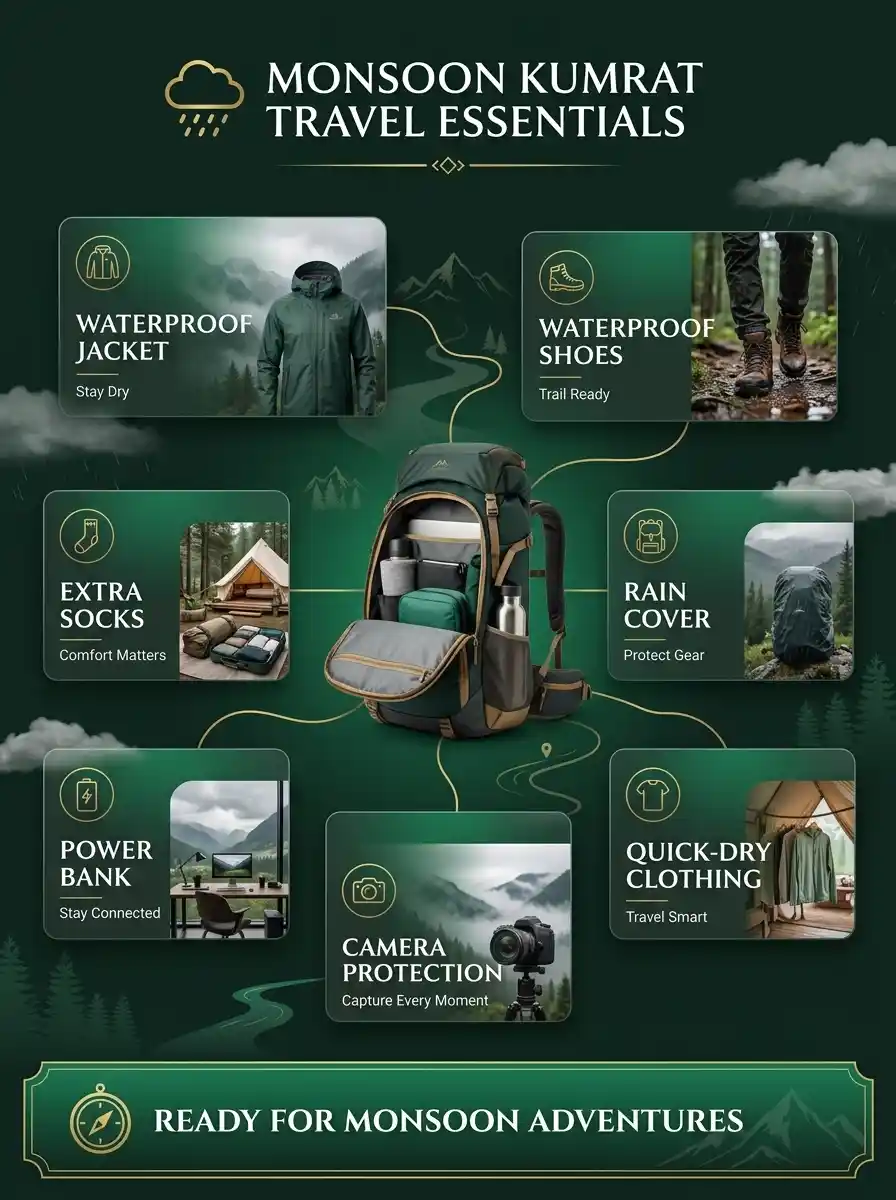
Proper preparation improves your experience significantly.
Essentials:
- Waterproof jacket
- Quick-dry clothing
- Waterproof shoes
- Extra socks
- Rain cover for bags
- Power bank
- Camera protection
For complete preparation, refer to our glamping gear checklist guide.
Where to Stay in Kumrat During Monsoon
Your experience depends heavily on your stay type.
For comfort-focused travelers, eco-glamping and nature stays offer a balanced experience of comfort and scenery.
You can explore curated stays at our Heaven on Earth resort.
Activities to Enjoy During Green Season
| Activity | Experience Type | Suitability |
| Wildflower photography | Creative | High |
| Riverside walks | Relaxation | High |
| Forest exploration | Adventure | Moderate |
| Picnics in meadows | Family | High |
| Bird watching | Nature | High |
| Light trekking | Adventure | Moderate |
Responsible Travel in Wildflower Zones
Since Kumrat’s flora is naturally growing, preservation is important.
Travelers should:
- Avoid picking wildflowers
- Stay on marked trails
- Avoid littering
- Respect forest areas
- Minimize noise in natural zones
This ensures the valley remains preserved for future visitors.
Why Monsoon in Kumrat Is Special
Unlike commercial destinations, Kumrat remains naturally untouched.
Key highlights include:
- Naturally growing wildflowers
- No artificial landscaping
- Dense forest ecosystems
- Seasonal transformation of entire valley
- Peaceful, low-commercial environment
This makes it one of the most authentic nature destinations in Pakistan.
Frequently Asked Questions (FAQs)
When is the best time to see wildflowers in Kumrat?
The best time is during monsoon (July to September), when greenery and floral growth are at their peak.
Are there flower gardens in Kumrat Valley?
No, wildflowers grow naturally across forests, meadows, and riverbanks.
Is Kumrat good for photography?
Yes, especially during monsoon when mist and greenery create cinematic landscapes.
Is it safe to visit Kumrat during rainy season?
Yes, but travelers should be cautious about road conditions and slippery terrain.
What should I wear in Kumrat during monsoon?
Waterproof clothing, sturdy shoes, and layered outfits are recommended.
Can families visit Kumrat in monsoon?
Yes, but proper planning and weather awareness are important.
What makes Kumrat’s greenery unique?
Its untouched cedar forests, natural river systems, and seasonal wildflower growth make it highly unique.