

High in the mountains, many plants do more than make the landscape green. For generations, local people have used them as food, tea, and home remedies. Learning about the Medicinal plants of the Hindu Kush helps travelers respect this knowledge and protect it. This guide explains which plants are traditionally used, why mountain plants matter for nature, and how conservation helps. It is written for curious readers, not as medical advice.
Which Medicinal Plants Are Traditionally Found and Used in the Hindu Kush Region?
Studies in northern Pakistan have recorded many useful plants in this mountain belt. One survey in the Hindu Kush range documented 94 medicinal plant species from 34 plant families, and another in Dir Kohistan listed 65 plants used for medicine and other purposes. These records show how rich the medicinal plants of northern Pakistan are.
Plants often named in studies from the Hindu Kush and nearby Kohistan include:
- Barberry (Berberis lycium), a shrub with edible berries and traditionally used roots
- Wild mint (Mentha species), used in teas and home remedies
- Sweet flag (Acorus calamus), a wetland plant with a long history of traditional use
- Himalayan edelweiss (Leontopodium himalayanum), a small high mountain flower
- Rhodiola (Rhodiola integrifolia), a hardy plant of rocky slopes
- Germander (Teucrium royleanum), a mountain herb of the mint family
- Himalayan elder (Sambucus wightiana), a shrub used locally
Together, these plants make up the Medicinal plants of the Hindu Kush that local families have known for generations.
What Plants Are Traditionally Used in Local Herbal Practices?
In local practice, people use different parts of a plant, such as leaves, fruit, roots, and flowers. In one study, leaves were the most common part used, at about 34 percent. Plants are often used singly or in mixtures, and the knowledge is held by elders and local healers.
These Himalayan medicinal herbs are also part of everyday life:
- Barberry berries eaten fresh in season
- Mint leaves added to tea and food
- Wild fruits and nuts gathered from forest edges
- Local reports note barberry as a cooling remedy and for jaundice
Knowing how people use the Medicinal plants of the Hindu Kush shows how close people and nature are in these valleys. Traditional use does not prove that a plant is safe or effective, so never treat yourself with wild plants.
Why Are Mountain Plants Important to Biodiversity?
Mountain plants hold soil on steep slopes, protect water sources, feed insects and birds, and shelter animals. Mountain plant biodiversity also helps forests recover after storms and grazing. Here is how plants support nature:
- They hold soil and reduce landslides on steep slopes
- They feed pollinators, birds, and mountain animals
- They give shade and moisture to the forest floor
- They keep water cleaner on its way to rivers
- They carry genetic variety that helps species adapt to change
A healthy plant community also supports wildlife, so protecting plants protects animals too. This is why Medicinal plants of the Hindu Kush matter beyond medicine.
How Do Medicinal Plants Contribute to Local Traditions?
In remote valleys, plants are part of culture. Knowledge passes from elders to children through stories, seasonal gathering, and shared recipes. Traditional herbal plants in Pakistan appear in home remedies, local foods, and small markets that support families.
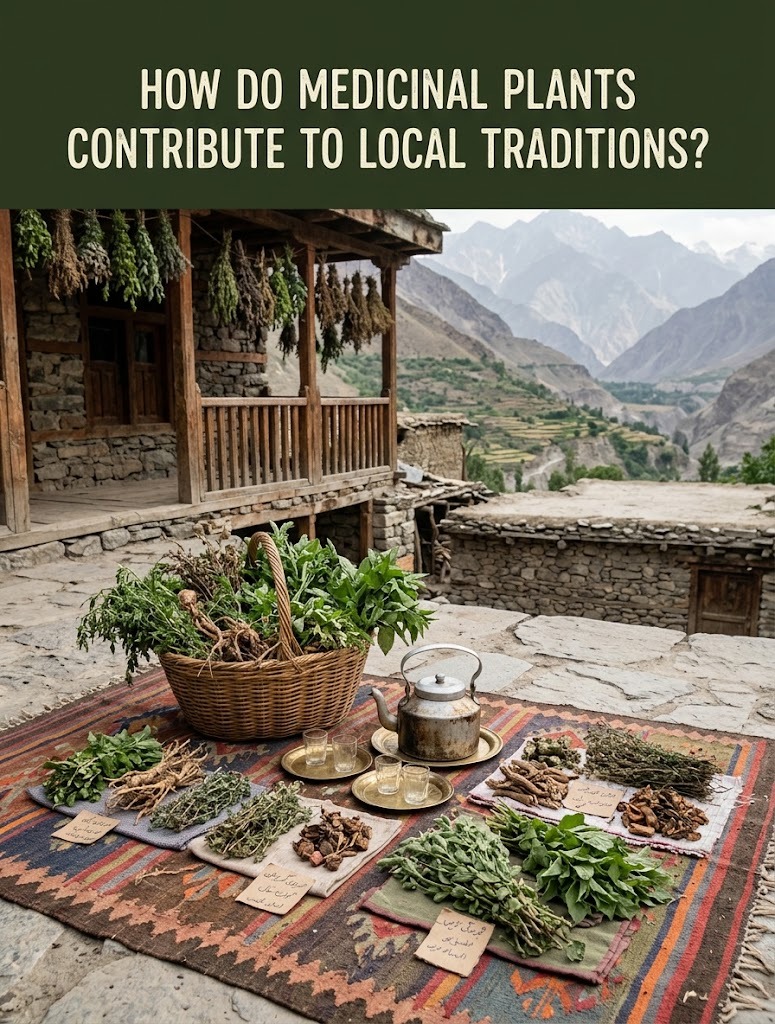
- Family knowledge shared by elders
- Seasonal gathering linked to weather and altitude
- Mountain teas and traditional foods
- Income from careful, small-scale collection
- Plant names and stories kept in local languages
A study in Kohistan warned that this cultural heritage faces risks, and another noted that traditional plant knowledge is fading from one generation to the next, so recording and respecting it matters. These traditions keep the Medicinal plants of the Hindu Kush alive in daily life.
Where These Plants Grow: Habitats and Elevation
Elevation, soil, and moisture decide which plants grow where:
- Lower forests and river banks: Berry shrubs, mint, and other soft-leaved herbs
- Mid-level forests: Shade-loving herbs and ferns
- High meadows and rocky slopes: Small hardy plants such as edelweiss and rhodiola
- Forest edges and village fields: Tough, useful shrubs and weeds
Cold winters and short summers make high mountain plants slow-growing, so they recover slowly after harvesting. Understanding habitat is key to protecting the Medicinal plants of the Hindu Kush.
Why Is Conserving Native Plant Species Important?
Studies warn that medicinal plants in northern Pakistan are at risk from unplanned collection, unwise harvesting, and overgrazing. When plants vanish, local knowledge and income can vanish too. Conserving native species keeps forests healthy and traditions alive. Medicinal plants of northern Pakistan need care from locals, visitors, and decision-makers alike.
Visitors can help by following these habits:
- Do not uproot or pick wild plants
- Take photos, not plants
- Stay on trails and avoid trampling meadows
- Support local guides and small local businesses
- Never buy illegally collected wild plants
- Report damage to forests or meadows to local authorities
Protecting native plants is the best way to keep the Medicinal plants of the Hindu Kush for the future.
Safety First: Learn, Do Not Self-Treat
- Some mountain plants are toxic if used the wrong way
- Never eat or use a wild plant unless a trained expert confirms it
- Speak to a doctor about any health problem
- Herbal products can interact with medicines
- Learn from local guides instead of picking plants
Learn Responsibly with Heaven on Earth
Heaven on Earth is near Thal Village in Kumrat Valley. Guests can join guided trekking tours with local guides who share knowledge of the valley flora, fauna, and folklore. Along the trails, you may see Himalayan medicinal herbs growing in their natural homes, from shady forest floors to open meadows. Guests can also:
- Rent a jeep to reach quiet viewpoints
- Relax in a dome with mountain views
- Enjoy a traditional breakfast with local flavors
We ask guests to look, learn, and leave plants untouched. Staying here is a calm way to see the Medicinal plants of the Hindu Kush in their natural setting.
Conclusion
The mountains of the Hindu Kush hold plants that feed people, shelter wildlife, and carry cultural memory. Traditional herbal plants in Pakistan show how deeply communities depend on nature, and Mountain plant biodiversity keeps forests and rivers healthy. When we protect plants, we protect water, animals, and the knowledge of elders. Respect the Medicinal plants of the Hindu Kush, and they will stay for the next generation.
Ready to see the mountains for yourself? Book your stay at Heaven on Earth today.
Frequently Asked Questions
Is it safe to try herbal plants I find on a trek?
No. Some mountain plants are toxic, and many look alike. Never eat or use a wild plant unless a trained expert confirms it.
Can I pick plants as souvenirs?
Please do not. Picking or uprooting plants harms the habitat and slows recovery. Take photos instead.
What is the best season to see mountain plants?
Late spring and summer usually show the most growth and flowers in the meadows. Conditions change with elevation and weather, so ask a local guide before you plan.
Why do mountain herbs grow slowly?
High areas have cold winters, thin soil, and short growing seasons. This is why heavy harvesting can harm them for years.
How can I learn more about local plants respectfully?
Walk with local guides, ask before photographing people or their gardens, and read trusted botany or ethnobotany sources.