
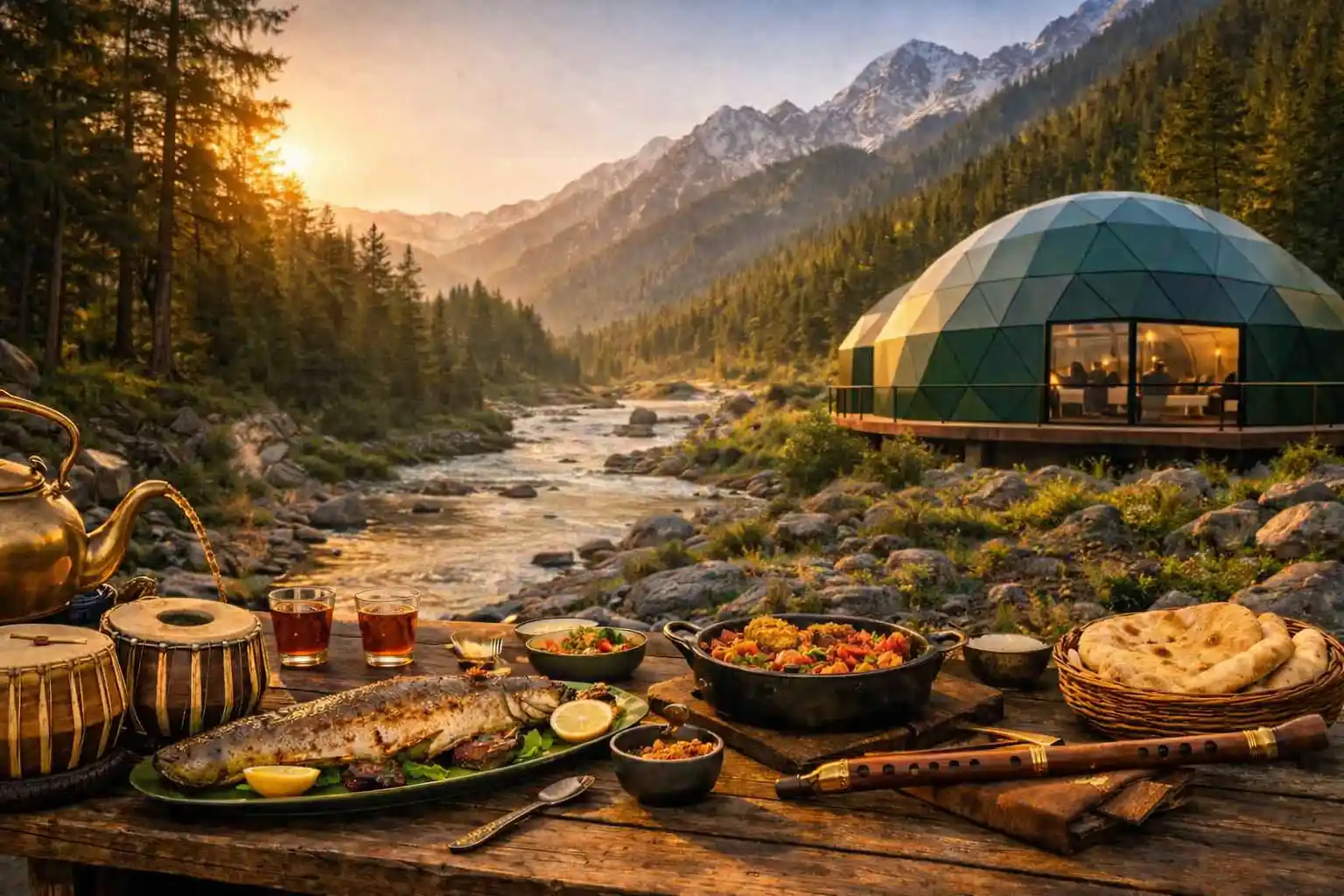
Nestled among the lush green valleys and towering mountains of Upper Dir, Kumrat Valley is often celebrated for its breathtaking landscapes, crystal-clear rivers, and dense forests. While most travelers visit for its natural beauty, there is another side of Kumrat that deserves equal attention: its rich culinary heritage, vibrant traditions, and colorful local festivities.
Exploring Kumrat local food and culture offers visitors an authentic glimpse into the daily lives of the communities that have called this valley home for generations. From freshly caught trout fish and traditional Pashtun dishes to folk music and seasonal celebrations, Kumrat provides a cultural experience that goes far beyond sightseeing.
Whether you are planning your first visit or returning to explore more deeply, this guide will help you discover the flavors, customs, and traditions that make Kumrat truly unique. Exploring Kumrat local food is one of the best ways to understand the valley’s culture, hospitality, and way of life.
Understanding Kumrat’s Cultural Heritage
Kumrat Valley is located in the Upper Dir district of Khyber Pakhtunkhwa. The region is predominantly inhabited by Pashtun communities who have preserved their traditions, language, hospitality, and customs over centuries.
Visitors are often welcomed with genuine warmth and generosity. Hospitality is considered an important cultural value, and guests are treated with great respect. It is common for locals to offer tea, traditional meals, or assistance to travelers exploring the valley.
The culture of Kumrat revolves around family, community gatherings, agriculture, livestock farming, and strong social bonds. Traditional clothing, local crafts, folk stories, and music continue to play an important role in everyday life.
Travelers looking to experience the valley beyond its scenery should spend time exploring local villages and learning about Kumrat culture, which remains deeply connected to the region’s history and traditions.
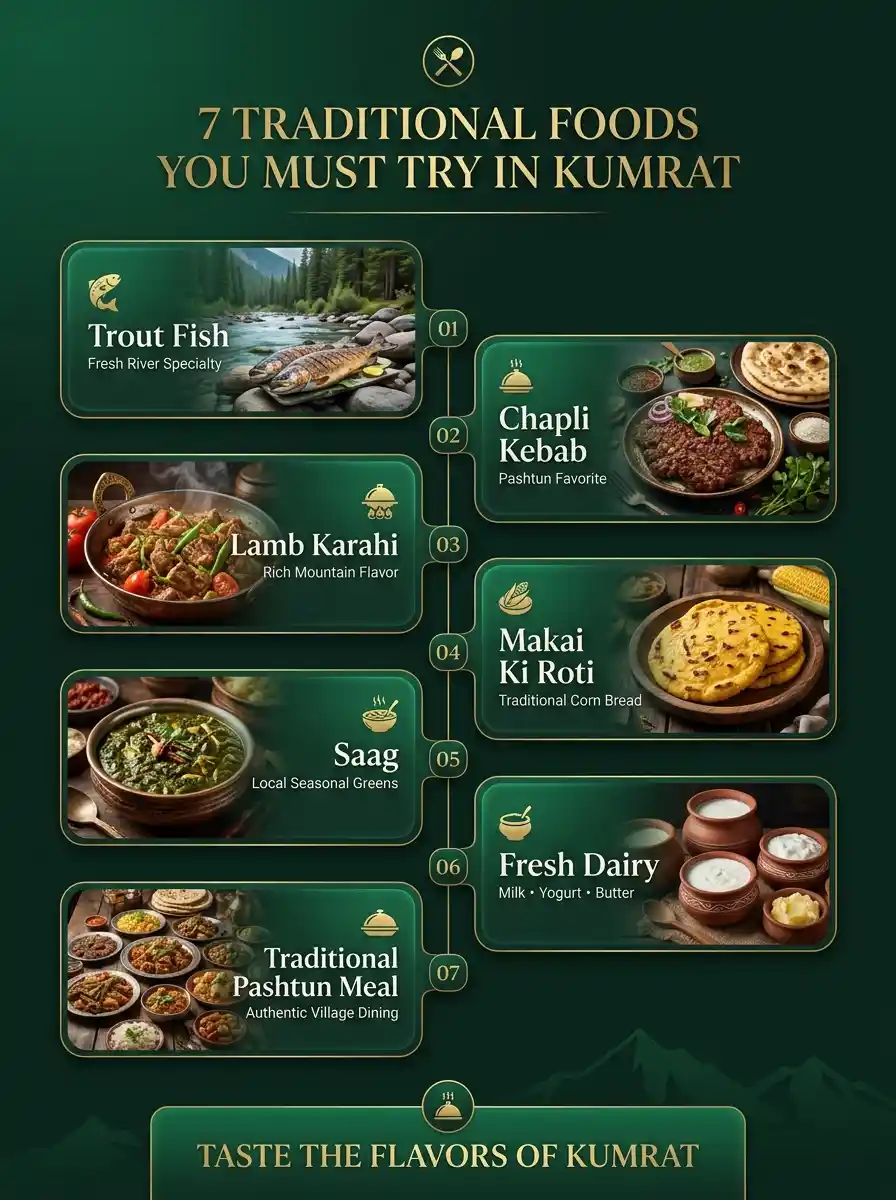
What to Eat in Kumrat: 7 Traditional Dishes You Must Try
1. Fresh Trout Fish
One of the most popular dishes in the valley is fresh trout fish. The cold rivers and streams flowing through Kumrat provide an ideal habitat for trout, making it a local specialty.
The fish is typically grilled, fried, or cooked with local spices while maintaining its natural flavor. Many roadside restaurants and guesthouses serve freshly prepared trout, making it a must-try dish for visitors.
Among all examples of Kumrat local food, freshly caught trout remains the most sought-after dish.
2. Chapli Kebab
Although widely associated with Khyber Pakhtunkhwa, Chapli Kebab is also commonly enjoyed in Kumrat. Made with minced meat, herbs, tomatoes, and spices, these flavorful kebabs are usually served with naan and chutney.
3. Lamb Karahi
Lamb Karahi is another favorite among locals and tourists alike. Prepared in traditional cooking pots using fresh lamb, tomatoes, green chilies, and aromatic spices, it offers a rich and satisfying dining experience.
4. Makai Ki Roti
Corn bread, locally known as Makai Ki Roti, is frequently served alongside meat dishes and dairy products. Its rustic flavor perfectly complements traditional village-style meals.
5. Saag
Prepared from leafy green vegetables, Saag is a nutritious and flavorful dish commonly consumed during cooler months. It is often paired with Makai Ki Roti for a traditional meal.
6. Local Dairy Products
The valley’s livestock farming tradition contributes to a variety of fresh dairy products, including:
- Homemade butter
- Fresh milk
- Yogurt
- Desi ghee
- Traditional cheese
Many visitors appreciate the rich taste and natural quality of these locally produced items.
Popular Local Foods in Kumrat
| Dish | Main Ingredients | Best Time to Try |
| Trout Fish | Fresh river trout, spices | Throughout the year |
| Chapli Kebab | Minced meat, herbs, spices | Lunch or dinner |
| Lamb Karahi | Lamb, tomatoes, chilies | Evening meals |
| Makai Ki Roti | Corn flour | Winter season |
| Saag | Leafy greens, spices | Autumn and winter |
| Fresh Dairy Products | Milk, butter, yogurt | All seasons |
7. Traditional Pashtun Meals
Many households and local eateries prepare complete traditional meals that combine fresh breads, meat dishes, vegetables, and dairy products. These meals offer visitors a genuine taste of the traditional food of Upper Dir and the surrounding mountain communities.
Traditional Food of Upper Dir and Its Influence on Kumrat
The traditional food of Upper Dir heavily influences Kumrat’s culinary identity. Due to the mountainous terrain and cooler climate, meals are often designed to provide energy and warmth.
Key characteristics include:
- Freshly sourced ingredients
- Minimal food processing
- Rich dairy consumption
- Meat-based dishes
- Seasonal vegetables
- Homemade breads
Unlike urban cuisines, traditional meals focus on simplicity, freshness, and nutritional value rather than elaborate presentation.
Many recipes have been passed down through generations, helping preserve the region’s unique culinary heritage.
Tea occupies a special place in Kumrat’s social life.
Guests are often welcomed with:
- Green tea (Qehwa)
- Black tea
- Herbal teas made from local ingredients
Tea gatherings provide opportunities for social interaction, storytelling, and community bonding. Visitors often find these moments among the most memorable parts of their trip.
Sitting beside a river while enjoying a hot cup of tea is one of the simple pleasures that defines the Kumrat experience.
Beyond its scenic beauty, Kumrat local food reflects generations of mountain living, and tea remains at the heart of local hospitality.
Festivals in Kumrat and Community Celebrations
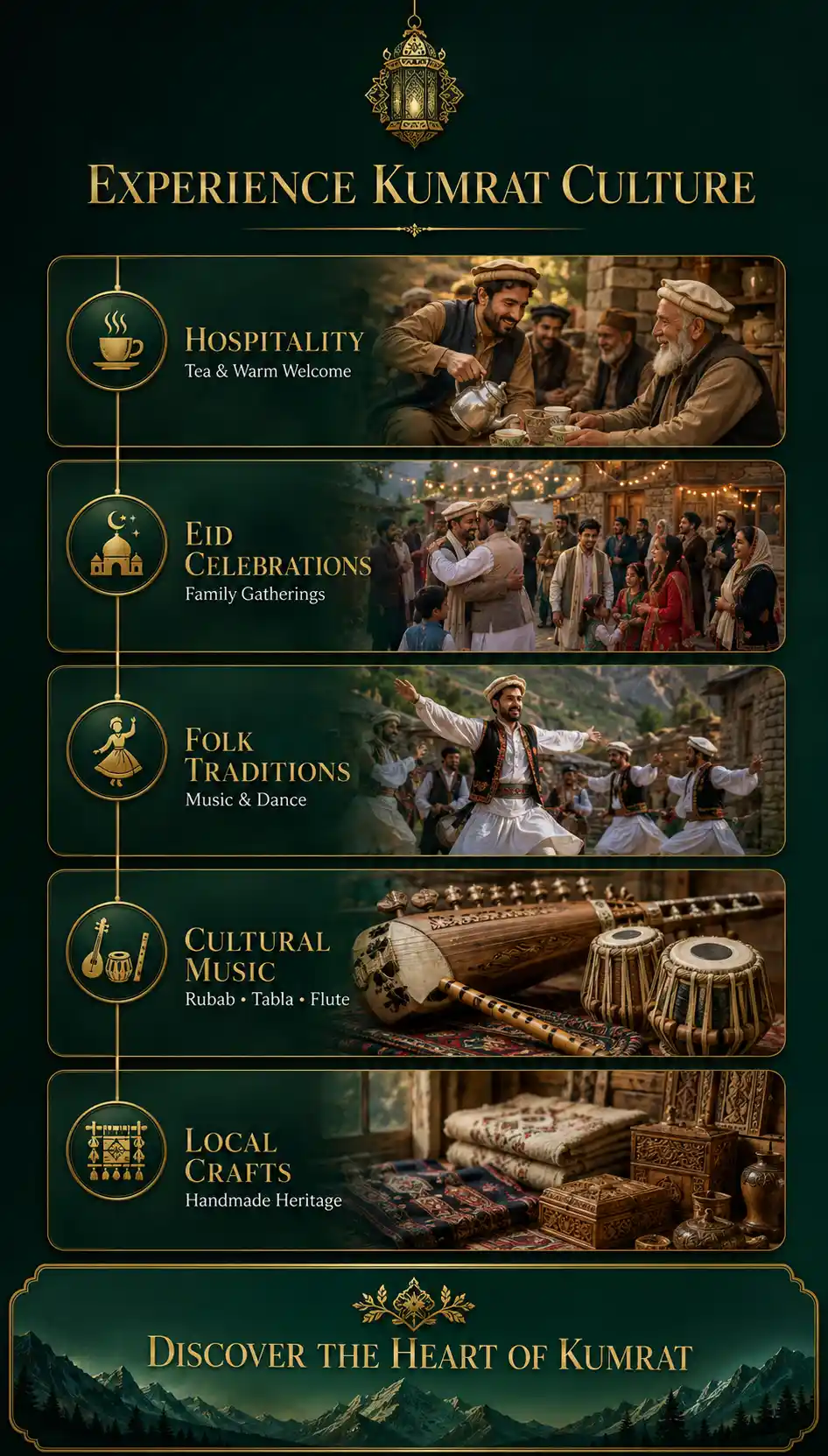
The cultural richness of Kumrat becomes especially visible during local festivals and community celebrations.
Food plays a central role in both daily life and major celebrations, making Kumrat local food an important part of local identity.
Eid Celebrations
Eid-ul-Fitr and Eid-ul-Adha are among the most significant festivals in Kumrat. Families gather, prepare special meals, visit relatives, and participate in communal festivities.
Traditional foods, sweets, and hospitality play a central role during these celebrations.
Seasonal Gatherings
During spring and summer, communities often organize local gatherings that include:
- Traditional music
- Folk dancing
- Community feasts
- Sports competitions
These events help preserve cultural traditions while strengthening social connections.
Wedding Celebrations
Pashtun weddings in Kumrat are colorful and deeply rooted in local customs. Wedding festivities may continue for several days and involve traditional music, large communal meals, and family gatherings.
Visitors who have the opportunity to witness local wedding traditions often gain valuable insight into Kumrat culture.
Traditional Music and Folk Culture
Music remains an important aspect of cultural life in Kumrat.
Traditional instruments commonly include:
- Rubab
- Mangey
- Tabla
- Flute
Local musicians perform at weddings, festivals, and community events, keeping centuries-old musical traditions alive.
Folk songs often tell stories about:
- Love
- Nature
- Heroism
- Historical events
- Daily life in the mountains
These performances contribute significantly to the cultural identity of the region.
Handicrafts and Local Artisans
Visitors can find handmade shawls, embroidered clothing, traditional caps, wooden crafts, and decorative items throughout the region. Purchasing locally made products helps support artisans and preserve traditional skills while contributing to the local economy.
The Role of Hospitality in Kumrat Culture
One of the most memorable aspects of visiting Kumrat is experiencing the hospitality of its people.
Hospitality is deeply embedded in Pashtun culture and is considered both a social responsibility and a source of pride.
Travelers often report receiving:
- Invitations for tea
- Assistance with directions
- Recommendations for local attractions
- Genuine kindness from residents
This welcoming atmosphere enhances the overall travel experience and encourages meaningful cultural exchange.
Responsible Cultural Tourism in Kumrat
As tourism continues to grow, preserving the valley’s cultural and environmental heritage becomes increasingly important.
Visitors can contribute positively by:
- Respecting local customs
- Dressing modestly
- Seeking permission before photographing people
- Supporting local businesses
- Purchasing local products
- Avoiding littering
- Respecting religious traditions
Supporting local restaurants and food vendors helps preserve Kumrat local food traditions for future generations while ensuring that tourism benefits local communities.
Where to Experience Authentic Kumrat Culture
For travelers looking to immerse themselves in local traditions, consider:
- Staying in locally managed guesthouses
- Dining at traditional restaurants
- Visiting nearby villages
- Participating in community events when appropriate
- Exploring local markets
- Engaging respectfully with residents
These experiences provide a deeper understanding of the valley beyond its scenic landscapes.
Conclusion
Kumrat Valley is much more than a destination for nature lovers. Its rich cultural heritage, traditional cuisine, warm hospitality, and vibrant celebrations offer travelers a truly immersive experience.
From savoring freshly caught trout fish and exploring the traditional food of Upper Dir to witnessing local festivities and learning about centuries-old customs, every aspect of Kumrat reflects the character and resilience of its people.
Experiencing Kumrat local food allows visitors to connect with the valley beyond its landscapes. From trout fish and traditional breads to family recipes passed down through generations, Kumrat local food remains one of the highlights of visiting the region.
For those seeking an authentic cultural journey in northern Pakistan, exploring Kumrat local food, traditions, and festivals is an experience that leaves lasting memories long after the trip ends. Mountain weather can change quickly. Before traveling, it’s always a good idea to review the latest forecasts from the Pakistan Meteorological Department.
For travelers looking to stay close to some of the valley’s most scenic locations and enjoy their local food, Heaven On Earth Resort provides a comfortable base from which to experience Kumrat’s unforgettable mornings and golden sunsets.
Frequently Asked Questions (FAQs)
What is the most famous local food in Kumrat?
Fresh trout fish is widely considered the most famous local dish in Kumrat due to the abundance of trout in the valley’s rivers and streams.
What traditional food is commonly eaten in Upper Dir?
Popular traditional foods include Lamb Karahi, Chapli Kebab, Makai Ki Roti, Saag, and various fresh dairy products.
What is special about Kumrat culture?
Kumrat culture is known for its strong hospitality, Pashtun traditions, folk music, community values, and preservation of local customs.
Are there cultural festivals in Kumrat?
Yes. Eid celebrations, seasonal community gatherings, weddings, and other festivals in Kumrat are important parts of local life.
What should tourists try eating in Kumrat?
Visitors should try trout fish, Chapli Kebab, Lamb Karahi, Makai Ki Roti, Saag, and locally produced dairy products.