

When you travel to Kumrat Valley, the scenery grabs your attention first. But the people who live here are just as interesting as the landscape. Upper Dir culture and traditions shape daily life in every village you pass, from how guests are welcomed to how families live with the seasons.
In this guide, you will learn what makes Upper Dir culture and traditions special, what to look for as you travel, and how to meet local life with respect and curiosity.
What Makes the Local Culture and Traditions of Upper Dir Unique?
Upper Dir sits in the green, hilly north of Khyber Pakhtunkhwa, and life here moves with the mountains. Villages are spread across steep slopes, so communities have stayed close. This closeness is central to Upper Dir’s local culture.
You will notice that hospitality comes first. Guests are treated with warmth, and a simple cup of tea can turn into a long, friendly chat. Family ties, respect for elders, and a strong sense of honor guide many everyday choices. This warmth sits at the heart of Upper Dir culture and traditions, and it means people often go out of their way to make you feel welcome.
What Languages Are Spoken in Upper Dir?
Pashto is the most widely spoken language in the region, and you will hear it in markets, homes, and on the road. In some upper valleys, including areas close to Kumrat, you may also hear Gawri, a local mountain language that many families speak at home. Urdu is understood by most people, and you may meet a few young locals who speak some English, especially where tourism has grown.
You do not need to speak any of these languages to get by. Still, learning a few simple words makes a real difference. A friendly greeting in Pashto often brings a big smile, and language is one of the quickest ways into Upper Dir culture and traditions.
What Traditional Crafts Are Found in the Region?
Mountain life has always called for practical skills, and many of these skills turned into crafts. Wool is a good example. In cold months, families make warm shawls, blankets, socks, and caps from local wool. Hand knitting and simple weaving are passed from one generation to the next.
Here are some crafts you may spot as you travel:
- Woolen shawls and blankets made for warmth in cold winters
- Wood carving and wooden furniture made from local timber
- Simple embroidery on clothing and household items
These crafts are part of Upper Dir cultural heritage, and buying them directly from local makers is a kind way to support families. Ask about the story behind a piece, and you may hear something memorable.
What Are Common Local Customs?
Many customs are part of Upper Dir culture and traditions, and they are built on respect, generosity, and community. Knowing a few of them helps you feel more at ease.
Some common customs include:
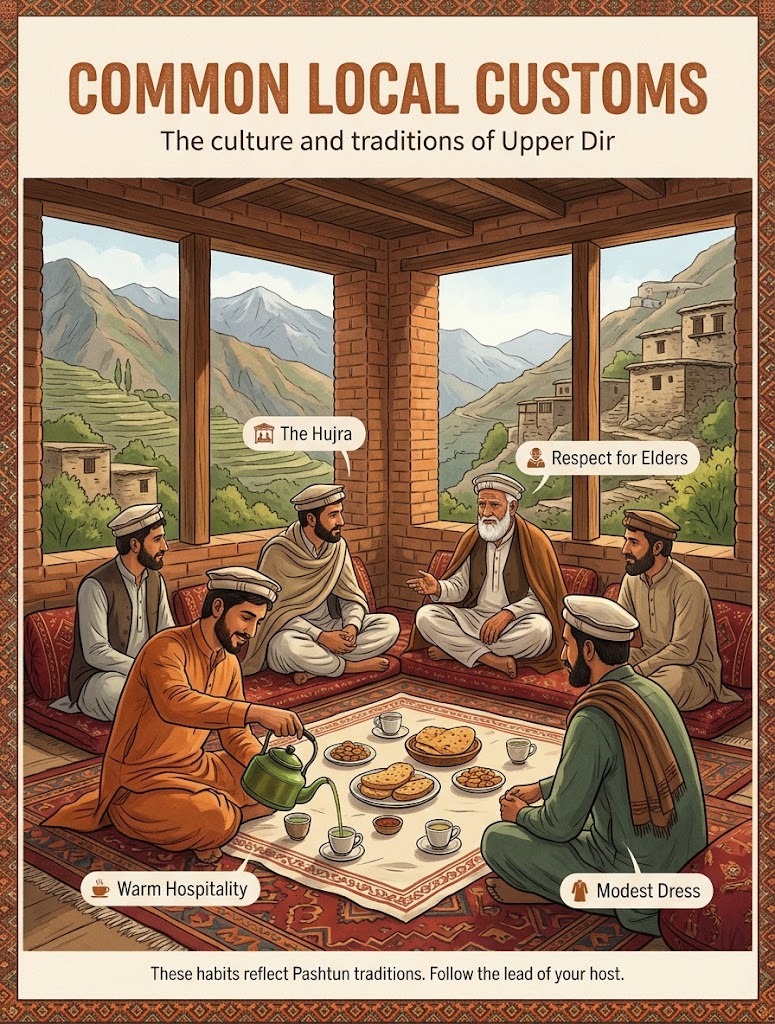
- Warm hospitality, where guests are offered tea, food, and a comfortable place to sit
- The hujra, a guest room or gathering space where men meet to talk and share news
- Respect for elders, who are greeted first and listened to carefully
- Modest dress, with most people wearing the traditional shalwar kameez
These habits reflect Pashtun traditions in Dir. As a visitor, wait to be invited and follow the lead of your host.
How Can Tourists Respectfully Experience Local Culture?
You can enjoy Upper Dir local culture and still be a thoughtful guest. A few simple habits go a long way in villages away from the main road.
Here is how you can show respect:
- Dress modestly, with loose clothing that covers your arms and legs
- Greet people politely and accept tea when it is offered
- Always ask before taking photos of people, and never photograph women without clear permission
- Remove your shoes when entering a home or a mosque if you are invited inside
Following these small steps shows that you value Pashtun traditions in Dir and the people who keep them alive. In return, locals often open up and share more of their world with you.
Mountain Life Through the Seasons
Traditional life in northern Pakistan follows the weather, and Upper Dir is no different. In spring and summer, families work on terraced fields, grow crops, and graze animals on higher green pastures. In autumn, harvests are gathered, and wood is stored. In winter, families stay close to home, share warm meals, and wait for snow to melt.
This rhythm gives the valley its calm feeling. When you see smoke rising from a village or hear a shepherd calling across a slope, you are seeing traditional life in northern Pakistan as it has been for years. It is a lovely part of Upper Dir culture and traditions.
Stay Close to Local Life with Heaven on Earth Resort
If you want to enjoy the valley in comfort while still feeling close to local life, Heaven on Earth Resort is a calm place to base your trip. You can take a gentle walk to nearby villages and return to a warm, cozy dome at the end of the day. Our team is happy to share simple tips on local etiquette and nearby walks. After a day of meeting people and learning about Upper Dir culture and traditions, a quiet evening by the campfire is a lovely way to think back on what you have seen.
Conclusion
The people of this region keep a rich way of life that is warm, proud, and deeply linked to the mountains. From language and crafts to hospitality and seasonal living, Upper Dir’s cultural heritage gives your trip a depth that scenery alone cannot offer. When you travel with respect, you help keep it strong for the next visitor.
Ready to experience it yourself? Plan your trip to Kumrat Valley and stay at Heaven on Earth Resort, where you can enjoy comfortable dome accommodation, warm hospitality, and easy access to the beauty of Upper Dir. Reach out to us today to check availability and book your stay.
Frequently Asked Questions
What is the best time of year to learn about village life in Upper Dir?
Late spring and early autumn are good choices. The weather is mild, farm work is active, and people are often outdoors, which makes it easier to see daily life as it happens.
Is it appropriate to give gifts to local families?
A small, simple gift such as sweets or dry fruit is usually welcome when you are invited into a home. Avoid anything flashy, and let your host open the gift in their own time.
What kind of local food should you try?
Freshly baked bread, simple meat dishes, dal, and hot tea are common and filling. Many meals use local ingredients and taste fresh.
Do local people celebrate festivals you can observe?
Religious festivals such as Eid are celebrated with family gatherings and shared meals. If you are visiting during a festival, observe quietly, dress modestly, and join in only if you are invited.
How can you learn more about the area before you travel?
Learning a few Pashto greetings and asking your host for advice are both helpful. A little preparation shows respect and helps you learn more about Upper Dir culture and traditions from day one.