

Kumrat Valley is not only about rivers and meadows. Its forests and high slopes are home to animals and birds that many visitors hope to see. Learning about the Wildlife of Kumrat Valley helps you know what lives here, where to look, and how to enjoy nature without harming it. This guide explains the animals, birds, habitats, and conservation needs of the area. Wildlife sightings are never guaranteed, so treat any list as a guide, not a promise.
What Wildlife Species Can Be Found in Kumrat Valley and Its Surrounding Forests?
Kumrat Valley wildlife includes a mix of forest and mountain species. Studies and reports commonly list these:
- Asiatic black bear
- Gray wolf
- Red fox
- Yellow-throated marten
- Kashmir musk deer
- Astor markhor
- Himalayan monal pheasant
Local and news reports also mention snow leopards, brown bears, ibex, monkeys, porcupines, and jackals in the wider mountain area. Many of these animals are shy and live far from the main tracks. Most visitors notice signs such as footprints, calls, or droppings more often than the animals themselves. That is normal for the Wildlife of Kumrat Valley.
What Birds Inhabit the Forests of Upper Dir?
Forest birds depend on trees, rivers, and open meadows. Reports mention the Himalayan monal, a colorful pheasant of high forests, and the chukar partridge. Nearby Himalayan mountain areas are also known for birds such as the snowcock and the koklass pheasant, so careful birdwatchers may spot related species. A full bird list for the valley is not widely published, so treat these names as examples.
The Birds of Upper Dir are easiest to find if you follow a few simple habits:
- Go out early in the morning, when birds are most active
- Walk slowly and stay quiet
- Carry binoculars and a small notebook
- Look near forest edges and along the river
- Keep your distance from nests
Birdwatching adds a lively side to the Wildlife of Kumrat Valley.
What Animals Live in the Hindu Kush Region?
The Hindu Kush mountains shelter both large and small mammals. Hindu Kush wildlife includes the Asiatic black bear, markhor, ibex, musk deer, and, in remote high zones, the snow leopard. Each animal has its own role:
- Black bear: Feeds on fruits, nuts, and insects in forests
- Markhor and ibex: Climb steep, rocky slopes with ease
- Musk deer: Shy animal that needs quiet, dense forest cover
- Snow leopard: Rare, elusive predator of the high mountains
- Red fox and wolf: Predators and scavengers that help balance nature
A research paper has even studied conflicts between people and Asiatic black bears in Kumrat, which shows why careful behavior around wildlife matters. These animals are an important part of the Wildlife of Kumrat Valley, and they need space to live.
Which Habitats Support Wildlife in Kumrat?
Different animals need different homes. Kumrat has several habitat types in a small area:
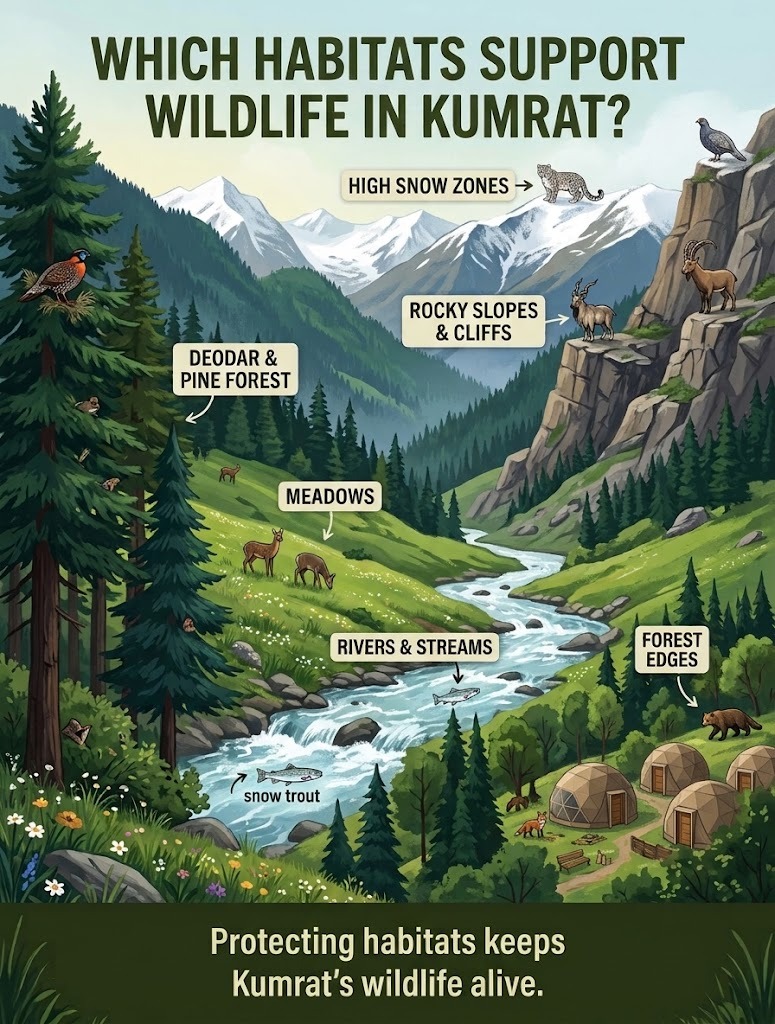
- Deodar and pine forest: Gives shelter, nesting places, and food
- Meadows: Offer open ground for grazing and feeding
- Rivers and streams: Provide water for animals and homes for fish such as snow trout
- Rocky slopes and cliffs: Suit markhor and ibex
- High snow zones: Support rare predators and high mountain birds
- Forest edges near villages: Attract foxes and bears searching for food
When habitat shrinks, animals move away or disappear. News reports have warned about the loss of deodar forest in the Dir Kohistan area, which is why habitat protection matters. Healthy habitats keep the Wildlife of Kumrat Valley alive.
How Can Forest Conservation Protect Local Wildlife?
Forests protect animals by giving them food, shelter, and safe paths to travel. You can help with simple actions:
- Protect trees and avoid cutting live wood
- Never feed wild animals
- Take all your waste with you
- Keep campfires small and in safe, approved spots
- Follow local rules and the advice of guides
- Keep noise low, especially in the early morning and evening
Wildlife conservation in Pakistan depends on local communities, visitors, and government rules working together. Responsible tourism also supports local jobs and gives people a reason to protect forests. Every visitor helps shape the future of the Wildlife of Kumrat Valley.
Wildlife Safety Tips for Visitors
- Stay on marked trails
- Trek with a local guide
- Keep food sealed and away from sleeping areas
- Never approach bears, wolves, or other wild animals
- Avoid walking in dense forest at dusk
- If you see an animal, stay calm, keep your distance, and move away slowly
Best Time to Spot Wildlife
- Spring: Animals become active, and birds start to sing
- Summer: Trekking is easiest and high meadows are open
- Autumn: Cooler air, and animals prepare for winter
- Winter: Snow pushes animals to lower ground, but roads and trails are harder
Early morning and evening are the best hours for Kumrat Valley wildlife sightings, when animals are most active. Planning around the seasons helps you see more of the Wildlife of Kumrat Valley.
Responsible Nature Stays at Heaven on Earth
Heaven on Earth is near Thal Village in Kumrat Valley. Guests can:
- Join guided trekking tours led by local guides who know the forests, plants, and animals
- Rent a jeep to reach quiet viewpoints and meadows
- Enjoy safe campfire setups in the evening
- Rest in a dome that keeps you close to nature
Our team encourages guests to respect the forest, keep a safe distance from animals, and leave no trace. Staying here lets you enjoy the Wildlife of Kumrat Valley with care.
Conclusion
Kumrat Valley is a living forest, with bears, markhor, musk deer, colorful pheasants, and many shy creatures. Learning about the Birds of Upper Dir and the wider Hindu Kush wildlife makes every walk more meaningful. Wildlife conservation in Pakistan starts with small choices, such as protecting trees, carrying out waste, and keeping a respectful distance. Protect the Wildlife of Kumrat Valley, and it will stay for future visitors. Ready to explore the forests? Book your stay at Heaven on Earth today.
Frequently Asked Questions
Is it safe to trek in Kumrat because of bears?
Trekking is generally popular, but you should be careful. Go with a local guide, keep food sealed, make normal noise on the trail, and never approach any animal.
Can I see a snow leopard in Kumrat?
It is very unlikely. Snow leopards are rare, shy, and live in remote high areas. Most visitors never see one.
Are there fish in the river?
Yes. Snow trout are commonly reported in the upper part of the Panjkora River, where the water is cold and clear.
What should I carry for wildlife watching?
Bring binoculars, a camera with a zoom lens, comfortable shoes, warm layers, water, and a small bag for your waste.
Is it okay to take photos of animals?
Yes, from a safe distance. Do not use flash, do not chase animals, and do not get close for a better shot.