

Imagine a valley where the seasons decide when you plant, what you eat, how you build, and when you rest. Here, nature sets the calendar, and communities follow it with skill and patience. In this guide, we explore life in mountain communities of Pakistan, and how families adapt their homes, food, work, and traditions as the seasons change. We write from Kumrat Valley in Upper Dir, where the pace of life still follows the mountains, and we hope this guide helps you understand and respect the people who call this region home.
How Do Mountain Communities Prepare For Winter?
Summer and autumn are busy seasons for preparation. Once snow arrives, travel can slow, and supplies are hard to replace, so families plan early. Winter life in mountain villages depends on what was stored before the first snowfall. Common preparations include:
- Firewood Stacks: Families cut and dry wood for heating and cooking.
- Food Storage: Grains, dried fruit, dried vegetables, ghee, and preserved meat are kept for the cold months.
- Warm Homes: Thick stone and timber walls, small windows, and fire pits or stoves keep heat inside.
- Animal Care: Livestock return from high pastures to lower areas, and fodder is stored for them.
- Roof Repairs: Roofs are checked and cleared so heavy snow does not cause damage.
This careful planning shows how life in mountain communities of Pakistan is built on shared knowledge passed down through generations.
Which Traditional Foods Are Common In Northern Pakistan?
Mountain food is simple, filling, and made from local ingredients. The traditional food of northern Pakistan gives warmth and energy for cold days and hard work. You may find:
- Maize Bread: A hearty flatbread often served with greens, butter, or yogurt.
- Dried Meat: Meat is often dried or preserved to last through winter.
- Dairy Foods: Milk, yogurt, buttermilk, and ghee add richness to daily meals.
- Walnuts and Dried Fruit: Easy to store and full of energy.
- Hot Tea: Green or milk tea is offered to guests with warmth and respect.
- Local Honey: A natural sweetener made from mountain flowers.
Food here is more than a meal. It is a sign of care, and sharing it is part of life in mountain communities of Pakistan.
How Does Seasonal Weather Shape Farming And Daily Routines?
For rural communities in Khyber Pakhtunkhwa, the weather sets the work for each season:
- Spring: Snow melts, fields are prepared, and seeds such as maize and vegetables go into the ground.
- Summer: Crops grow, and animals graze in high green pastures while families work long days.
- Autumn: Harvests are gathered, dried, and stored, and wood is collected.
- Winter: Work moves indoors, with repairs, crafts, and family time.
Mornings begin early, and days follow the sun. Because growing seasons are short at high altitude, every warm day counts, and life in mountain communities of Pakistan stays closely tied to the land.
What Role Do Local Crafts And Oral Traditions Play In Mountain Culture?
Crafts and stories keep a community connected to its past. Mountain culture in northern Pakistan has long been shaped by skilled hands and spoken words, especially during long winter evenings. Look for:
- Woodwork: Carved doors, beams, and furniture, often made from local timber.
- Wool and Weaving: Warm shawls, caps, and blankets made for cold weather.
- Embroidery: Colorful patterns passed from one generation to the next.
- Folk Songs and Music: Melodies and poems shared at gatherings.
- Storytelling: Elders share legends, history, and life lessons.
These traditions teach young people where they come from. They also give life in mountain communities of Pakistan a rich identity that no machine can copy.
How Are Changing Weather Patterns Affecting Mountain Livelihoods?
Mountain families are among the first to feel a changing climate. Many report less predictable seasons, and the impact is real for rural communities in Khyber Pakhtunkhwa:
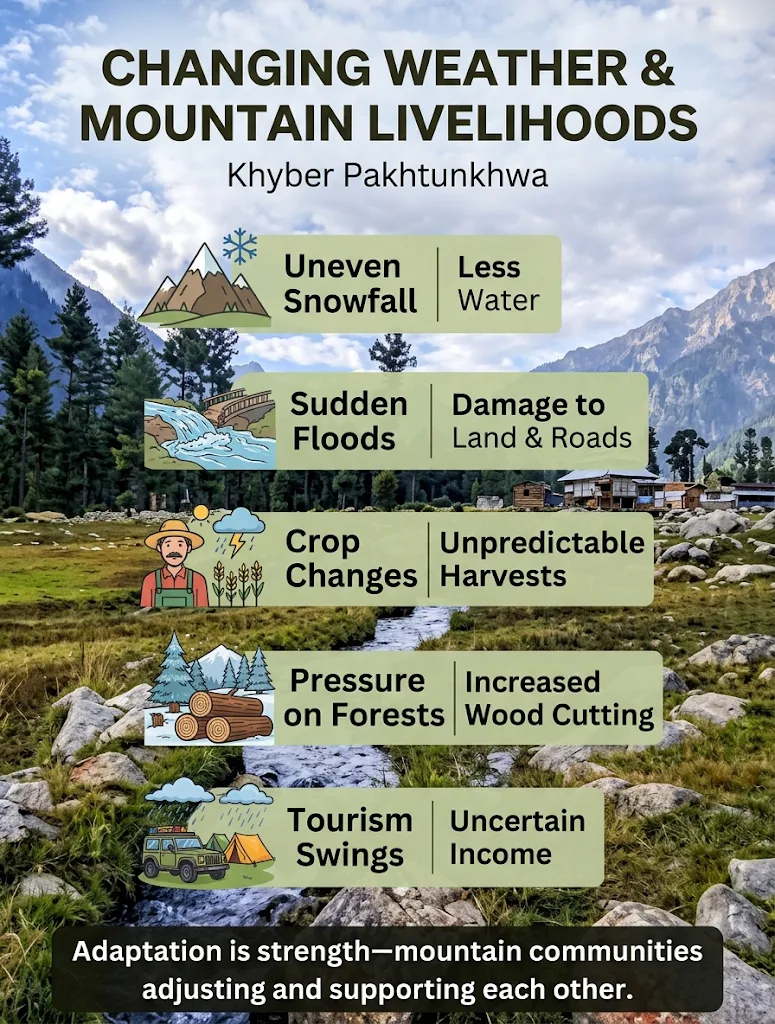
- Uneven Snowfall: Less snow can mean less water for springs and fields in summer.
- Sudden Floods: Heavy rain and fast melt can damage roads, bridges, and farmland.
- Crop Changes: Shifts in temperature can affect planting and harvest times.
- Pressure on Forests: Harsh winters and rising demand can increase wood cutting.
- Tourism Swings: Weather affects travel plans and local incomes.
Even so, people adapt. They adjust planting dates, repair water channels, and support each other, which is a lasting strength of life in mountain communities of Pakistan.
What Makes Community Spirit So Strong In The Mountains?
When snow closes paths, and help is far away, neighbors depend on each other. In winter, life in mountain villages, this spirit becomes even clearer:
- Shared Work: Neighbors help with harvests, roofs, and clearing snow.
- Open Hospitality: Guests are welcomed with tea, food, and a warm place to rest.
- Respect for Elders: Older people guide decisions with experience.
- Collective Care: Families look after anyone who is sick, old, or alone.
These values are central to life in mountain communities of Pakistan, and visitors often remember the kindness more than the scenery.
How Can You Experience This Culture Respectfully In Kumrat Valley?
A visit is most rewarding when you come with curiosity and care:
- Choose Your Season: Late spring to early autumn is usually the easiest time to travel, since winter brings heavy snow.
- Ask Before Photos: Always request permission before photographing people or homes.
- Dress Modestly: Simple, respectful clothing is appreciated in village areas.
- Taste Local Meals: Try the traditional food of northern Pakistan and thank the people who prepare it.
- Buy Local Crafts: Support artisans directly, as we encourage every guest at Heaven on Earth Resort.
- Leave No Trace: Carry out your waste and keep rivers and forests clean.
Conclusion: Meet The Mountains With Respect
The mountains teach patience, teamwork, and balance. From stored grain and warm homes to shared tea and old stories, here are five things to remember:
- Plan Ahead: Winter readiness starts months before the snow.
- Use What Is Local: Food and building materials come from the land.
- Honor Traditions: Crafts and stories carry history forward.
- Adapt Together: Communities face changing weather as a team.
- Welcome Guests: Hospitality is a way of life.
Learning about life in mountain communities of Pakistan makes any journey richer. If you want to see mountain culture in northern Pakistan with your own eyes, come and stay with us at Heaven on Earth Resort in Kumrat Valley, where forests, rivers, and village traditions surround you. Book your stay today and discover the seasons the way the mountains intended.
Frequently Asked Questions
Why Do Mountain Homes Use Stone And Timber?
Both materials are local, strong, and good at holding heat. Thick walls keep cold air out, while timber beams add flexibility and warmth.
How Cold Do Winters Get In The Northern Mountains?
Winters can bring heavy snow and freezing temperatures, especially at higher elevations. Conditions differ from valley to valley, so always check the forecast and road status before you travel.
What Is It Like To Experience Life In Mountain Communities Of Pakistan As A Visitor?
Expect a slower pace, friendly greetings, and simple, honest meals. Keep these tips in mind:
- Be Respectful: Follow local customs and greet people politely.
- Be Patient: Plans may shift with weather and road conditions.
- Be Curious: Ask questions and listen to local stories.
Are Local Handmade Items Worth Buying?
Yes. Buying directly from artisans supports families and keeps traditional skills alive. Ask about how an item was made, and choose truly handmade pieces.
What Should I Pack For A Trip To Kumrat Valley?
Pack light, but pack smart:
- Warm Layers: Mountain evenings can be cool even in summer.
- Sturdy Shoes: Choose a pair with good grip for uneven paths.
- Rain Jacket: Weather can change quickly in the mountains.
- Some Cash: Digital payments may not work in remote areas.
- Reusable Water Bottle: Stay hydrated and reduce plastic waste.